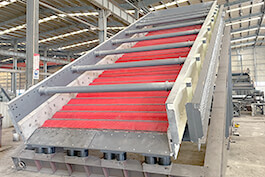
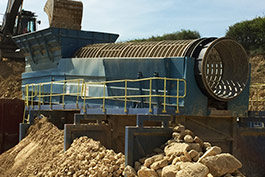
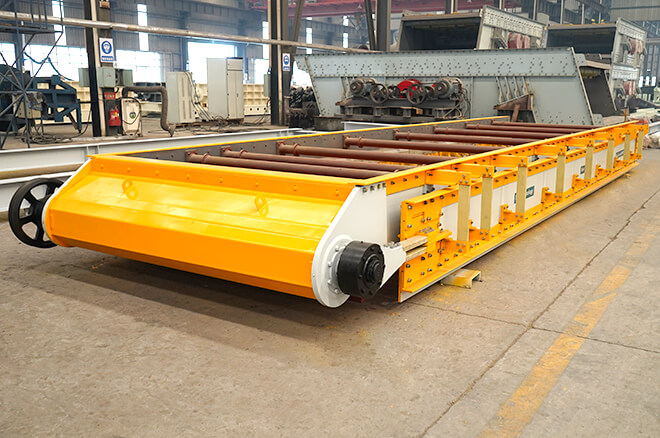
Flip-flow screens, also known as Flip-Flop screeners, are a screening equipment suitable for viscous and humid materials, which can provide efficient screening solutions for viscous and difficult to screen materials. Applications include wet recycled materials as well as high moisture and viscous ash, mineral and clay-based materials, or industries such as coal preparation plants, coal chemicals, fertilizer plants, construction aggregates, and non-ferrous metals. The size of the material processed is usually between 0 and 100 mm.
Address: Middle of Xinchang North Line, Xinxiang City, Henan Province, China
WORKING PRINCIPLE
Share:
The flip flow screen, also known as the crank and link flip flop screen, works as follows:
1. Structure basis:
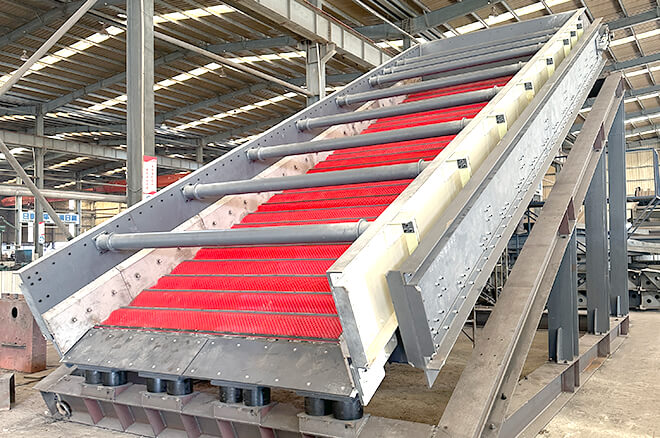
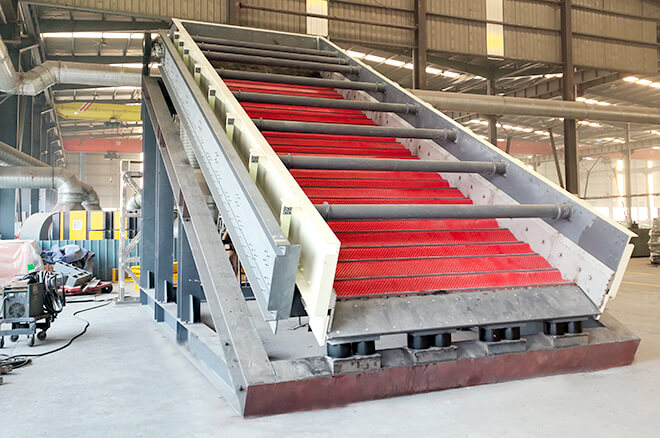
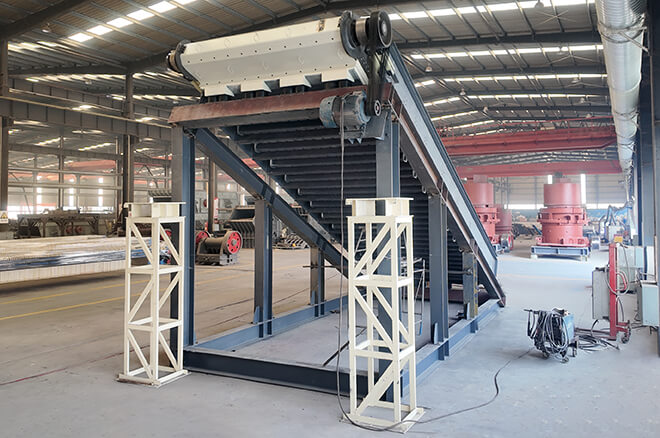
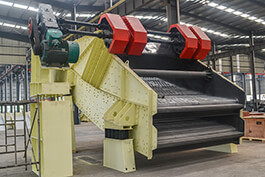
Flip flow screen is mainly composed of two screen frames, namely screen frame I and screen frame II, screen frame II into the screen frame I, screen frame II is supported on the frame with vibration isolation spring. There is a hanging device between the two, the screen frame I parallel hanging on the screen frame II, the hanging device can also be used as a guide, so that the screen frame I, II can be relatively parallel movement. Each screen frame consists of two side plates connected by crossbeams, and the two ends of the polyurethane screen plate are respectively fixed to the crossbeams of the screen frame I and II.
2. Power transmission:
The motor drives the eccentric shaft through the pulley to rotate, and the eccentric shaft pushes and pulls the screen frame through the connecting rod. Since the quality of the two screen frames is approximately equal, the screen frame II pushes and pulls the screen frame I at the same time, the screen frame I also pushes and pulls the screen frame II.
Screen frame motion: Screen frame I and screen frame II will produce opposite and opposite alternating motion, the relative amplitude is positive or negative 12mm, the absolute amplitude of each screen frame is 6mm. For example, when screen frame II pushes screen frame I, screen frame I moves forward 6mm, screen frame II moves backward 6mm; When the screen frame II pulls the screen frame I, the screen frame I moves back 6mm, and the screen frame II moves forward 6mm.
3. Screen plate action:
The beam mounted on the screen frame drives the flexible screen plate to alternately tighten and relax.
Material screening: the tension and relaxation of the screen plate make the material on the screen surface "spring - fall - spring" cycle process, so as to achieve the screening of the material, so that the material that meets the size of the sieve hole falls through the sieve hole, and the material that does not meet the screen surface continues to be screened, in order to achieve the purpose of separating the different particle size of the material. The flip flow screen usually operates at a frequency of around 500-600r/min.
FEATURES
1. The screening effect is good:
The equipment excels at handling challenging screening materials, delivering up to 50g acceleration to effectively loosen, stratify, and sieve fine, viscous, and wet materials.
2. The screen is not easy to plug:
Tension-free polyurethane screen vibrates at high frequency, continuously expanding and contracting to prevent blinding and ensure uninterrupted screening.
3. High screening efficiency:
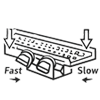
High material velocity and thin bed depth at the feed end enable rapid fines passage, while the low discharge inclination and reduced speed ensure full undersize penetration—delivering high overall screening efficiency.
4. Reliable equipment performance
Less rotating parts: high operational reliability, less daily maintenance workload, and high equipment utilization.
5.No impact:
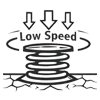
Rubber springs carry vertical load and inclined inertia only; low-speed operation without vertical impact reduces foundation load and minimizes capital investment.
6. Long service life
Polyurethane screen panels withstand high-intensity vibration and repeated flexing, offering excellent wear resistance, elasticity, and fatigue strength for extended service life.
APPLICATIONS
Flip-flow screens are used in multiple industries, especially where screening of wet, sticky, or fine materials is needed. Key industries include:
Recycling & Waste Management (municipal solid waste, construction & demolition waste)


 1. The screening effect is good:
 2. The screen is not easy to plug:
 3. High screening efficiency:
 4. Reliable equipment performance
 5.No impact:
 6. Long service life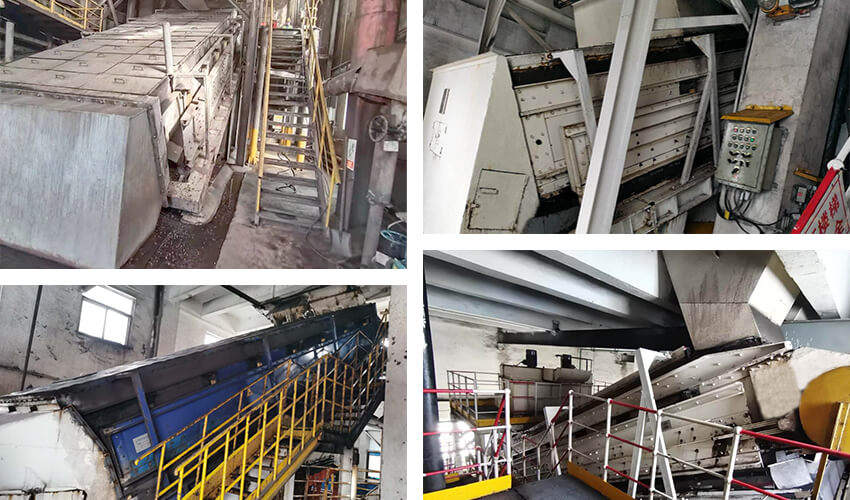
.jpg)