Introduction
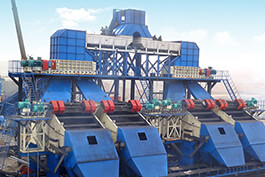
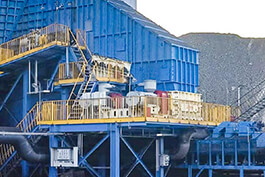
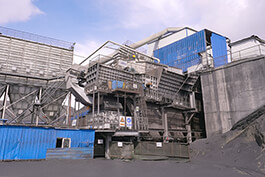
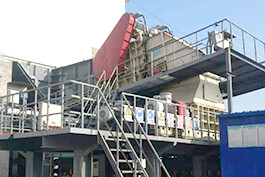
Roller screen, as a key screening equipment in fields such as solid waste treatment, mining, building materials and recycling of renewable resources, its processing capacity determines the operational efficiency and economic benefits of the production line. The key factors affecting the processing capacity include: the width and length of the screen surface, the characteristics of the materials, the spacing of the screen shafts, the rotational speed of the rollers, the particle size of the feed, etc.
The Width And Length Of The Screen Surface
The Role Of Width
The width of the screen surface determines the effective lateral area of the material spread on the screen surface. A wider screen surface means that under the same feed thickness, it can accommodate a greater instantaneous material flow rate, the material passing through per unit time is smoother, and the processing capacity will also be relatively higher.
Length And Material Residence Time
The length of the screen surface affects the residence time of the material on the screen surface. The material needs sufficient time to be flipped and loosened under the drive of the rollers, allowing fine particles to have the opportunity to pass through the material layer and reach the screen surface, and then fall through the screen gaps. If the screening length is insufficient, the material will be pushed out of the roller screen too quickly, resulting in the qualified material not being screened out in time and mixed with the material on the screen.
Design Optimization
When designing the width and length of the roller screen, it is necessary to optimize the configuration based on requirements such as the limitations of the application site. One cannot only increase the width while ignoring the length or make it too long but not wide enough. A reasonable width-to-length ratio is the basis for ensuring both high processing capacity and high screening efficiency.
The Moisture Content And Viscosity Of The Material
The Influence Of Wet Materials On Screening
When the moisture content of the material is high or it is inherently sticky, the moisture will form an adhesive force between the material particles and between the material and the surface of the screen plate. The stickiness will cause the material to clump and be difficult to loosen, greatly affecting the screening process.
Sieve Hole Blockage
Sticky materials can easily adhere to the edge of the sieve plate and the sieve shaft of the roller screen. After the equipment has been running for a long time, it will fill the effective gaps between the sieve shafts, and the effective screening area will sharply decrease.
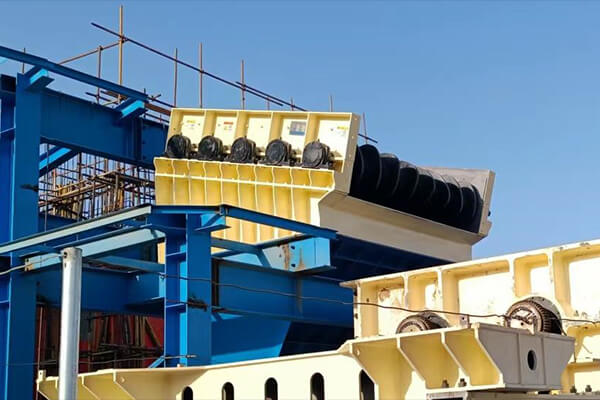
The Spacing Of The Screen Shafts And The Shape Of The Screen Discs
Screen Shaft Spacing And Classification Particle Size
The spacing of the screen shafts is a direct parameter that determines the size of the material passing through the screen. The greater the spacing, the larger the size of the material blocks allowed to pass through. From the perspective of processing capacity, a larger spacing means that the under-screen material channel is wider, and the amount of material that can pass through within a unit of time is greater. Therefore, the processing capacity of the roller screen is relatively higher, but the screening accuracy is not high.
Screen Disc Design
The shapes of Screen disc include circular, elliptical, polygonal, etc., and their eccentric and interlaced arrangements jointly achieve the screening of materials. Eccentric discs or irregular-shaped discs can exert an upward throwing force on the materials, breaking the material layer structure and exposing the fine particles contained within, thereby accelerating the screening process and indirectly enhancing the processing capacity.
The Balance Between Design And Performance
When determining the spacing of the sieve shafts of the roller screen, it is necessary to find a balance point between processing capacity and screening accuracy based on the actual production requirements. Then, select the appropriate shape and layout of the sieve discs to make up for the loss of screening accuracy caused by excessive spacing of the sieve shafts to a certain extent, and achieve the coordinated improvement of processing capacity and screening performance.
Screen Shaft Rotational Speed
The Influence Of Rotational Speed On The Flow Rate Of Materials
The rotational speed of the sieve shaft of Roller screen directly controls the conveying speed of the material on the sieve surface. The higher the rotational speed, the stronger the pushing effect of the Screen disc on the material, the faster the material moves forward, and theoretically, the processing capacity per unit time is also higher. An appropriate rotational speed can achieve an ideal throwing height and promote the loosening of the material. However, the rotational speed is not the higher the better. Excessively high rotational speed will cause the material to jump too vigorously on the screen surface, and the material will be pushed out rapidly before it is fully screened, resulting in a decrease in screening efficiency.
Optimal Rotational Speed
For materials with different characteristics, there exists an optimal rotational speed range within which the materials can not only obtain sufficient driving force to maintain a certain forward speed but also have enough time to flip and loosen on the screen surface. The appropriate rotational speed needs to comprehensively consider the particle size distribution, moisture content, viscosity of the material, as well as the specific structural parameters of the screening equipment.
Feed Particle Size Distribution
The Influence Of Fine Material Content
If the content of materials smaller than the sieve hole size in the feed is too high, these fine materials will quickly pass through the sieve gap. This is a good thing in itself. However, when the content of fine materials is high, it will submerge the sieve surface after entering the roller screen and may form a fine material layer below the sieve surface, hindering the smooth discharge of subsequent fine materials.
The Negative Effects Of Oversized Materials
If the material contains a large number of super-large blocks with a size much larger than the designed size, it will occupy a large amount of effective screening area, slow down the overall flow rate of the material, and may cause huge impact or jamming risks to the screen shaft and screen plate. In mild cases, it will reduce the processing capacity; in severe cases, it may lead to equipment shutdown or even damage.
The Importance Of Pretreatment
By setting up grilles, crushers or pre-screening equipment at the front end to control the feed particle size within a relatively uniform range that is in line with the design range, the actual processing capacity of the roller screen can be greatly stabilized and improved.
Conclusion
The processing capacity of Roller screen is influenced by multi-dimensional factors. In practical applications, factors such as the width and length of the screen surface, the gap of the screen shaft, and the characteristics of the materials must be considered as a whole. Through refined selection, scientific operation and strict maintenance, the potential of the equipment can be maximized to achieve the maximization of production efficiency.


.jpg)