Introduction
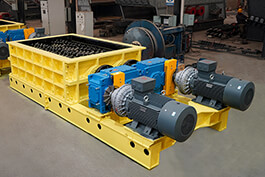
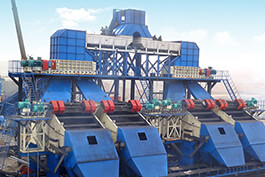
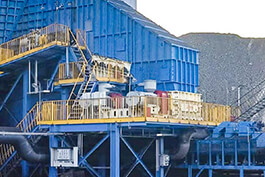
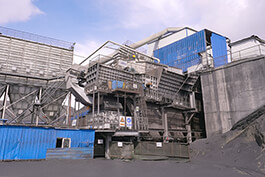
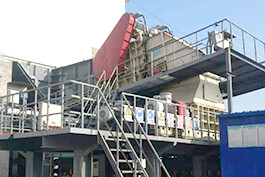
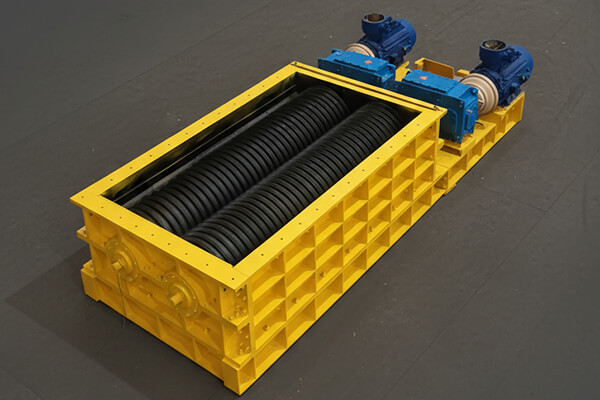
Mineral Sizer, with its compact structure, stable crushing ratio and few overgrinding phenomena, holds an important position in the mineral processing procedures of industries such as mining, building materials and metallurgy. As the core vulnerable part of the Mineral Sizer, the wear state of the tooth plate directly determines the crushing efficiency, output particle size and operational stability of the equipment. In actual production, uneven wear of the tooth plate will shorten its service life, increase the cost of spare parts replacement, and also cause a series of problems such as abnormal equipment vibration and rising energy consumption. In severe cases, it may even affect the continuous operation of the entire production line.
Diagnosis of uneven wear
Wear difference
The height difference of the tooth tips: In normally worn tooth plates, the height of the tooth tips on the surface is uniform and consistent. However, in unevenly worn tooth plates, local tooth tips may be excessively worn or even flattened, with the height difference between the tooth tips on both sides reaching several millimeters.
The asymmetry of flank wear can be determined by comparing the wear marks on both sides of the tooth plate to see if there is a problem of intensified flank wear on one side and deformation of the tooth profile. Observe whether there are any abnormal wear marks such as local depressions or cracks on the surface of the tooth plate.
Wear state
When the toothed plate undergoes uneven wear, the force state inside the crushing chamber will be distorted. The originally stable crushing gap will be disrupted, resulting in a significant abnormality in the particle size distribution of the output. Suddenly, a large amount of large pieces of material exceeding the specification requirements will appear in the finished product, and it is impossible to form an effective squeezing and shearing effect on the material. Some materials are discharged from the crushing chamber without being fully crushed.
Abnormal operating conditions of the mineral sizer
Abnormal vibration of the machine body: Due to uneven force on the tooth plate, Mineral Sizer will experience periodic abnormal vibration during operation. The amplitude and frequency of the vibration are significantly different from those under normal working conditions. Quantitative monitoring can be carried out through vibration sensors.
Motor current fluctuations are manifested as an increase in the difference of load currents on both sides of the motor, with the current on one side persistently higher than that on the other. This is due to uneven wear causing an imbalance in the distribution of crushing resistance, and the drive system needs to output a greater torque to maintain operation, which is ultimately reflected in the changes of current parameters.
Analysis of the Causes of uneven wear
The feeding distribution is uneven
Design defect of the feeding chute
The chute connects the upstream silo with the Mineral Sizer crushing chamber. If the Angle of the chute and the position of the guide plate are not reasonably designed, it will cause the material to not be evenly distributed throughout the entire width of the crushing chamber. The local area of the tooth plate will bear a crushing load far exceeding the design value, and the wear rate will increase sharply, eventually resulting in uneven wear.
The influence of material segregation
Material segregation refers to the phenomenon where materials of different particle sizes and hardness undergo stratification and separation during conveying and unloading. Large hard stones are concentrated on one side of the crushing chamber, while fine materials are concentrated on the other side, which can cause severe uneven force distribution on both sides of the tooth plate. When large hard stones come into contact with the tooth plate, they will generate greater compressive and shearing forces, leading to accelerated wear of the tooth plate in this area. In areas where fine materials are concentrated, the crushing resistance is relatively small, and the wear rate of the tooth plate is relatively slow.
Variation in material properties
The hardness distribution of the ore is uneven
The hardness of the ore in the same batch is not completely uniform. If there are significant differences in the hardness distribution of the ore within the working face, the wear rate in the area where the tooth plate comes into contact with high-hardness ore will be much higher than that in the area where it comes into contact with low-hardness ore. When the Mohs hardness of the ore processed on the left side of the crushing chamber is 12 grades higher than that on the right side, the wear rate of the left tooth plate will increase, and a significant wear difference will appear in a short period of time.
The influence of caking of viscous materials
When dealing with viscous ores with a high moisture content, the materials are prone to caking in local areas of the crushing chamber. The agglomerated materials will form a hard "material pad", altering the local crushing pressure distribution - the crushing resistance in the agglomerated area will increase significantly, and the tooth plates will have to bear greater impact forces, which in turn leads to accelerated wear in this area. Meanwhile, the agglomerated materials will also clog some of the crushing gaps, preventing the toothed plates in other areas from fully exerting their crushing effect and further intensifying the unevenness of wear.
Mechanical alignment issues
The parallelism of the two axes exceeds the standard
The two rollers of Mineral Sizer must maintain strict parallelism to ensure uniform contact between the toothed plates and the material. If the parallelism of the roller shaft exceeds the design allowable range after installation or long-term operation, it will cause uneven gap distribution in the crushing chamber, and the local area of the tooth plate will be subjected to excessive squeezing load, accelerating the wear rate.
The torque of the drive system is unbalanced
The drive system of Mineral Sizer is composed of components such as motors, reducers, and couplings. If the gears of the reducer wear unevenly or the coaxiality deviation of the coupling is too large, it will lead to unbalanced torque transmission. The rotational speed and force on the two roller shafts will be different, and the unbalanced torque will be directly transmitted to the tooth plate, causing accelerated wear on one side of the tooth plate and resulting in an uneven wear fault.
The intrusion of foreign objects such as ironware
During the production process, occasional non-crushing objects such as ironware and steel blocks entering the crushing chamber will collide violently with the surface of the tooth plate, causing local tooth tips to crack and deform, and disrupting the normal tooth shape of the tooth plate. The crushing capacity of the damaged area drops significantly, and it will cause distortion of the force distribution in the surrounding area, thereby leading to the continuous expansion of the range of uneven wear.
Engineering solutions for achieving long-term stable operation
Optimize the design of the feeding chute
First, adjust the Angle of the chute and the position of the guide plate. By calculating the reclining Angle and flow rate of the material, design a reasonable chute inclination Angle to ensure that the material can be smoothly and evenly spread across the width of the crushing cavity. At the same time, install or adjust the guide plate to change the impact direction of the material and avoid the concentrated impact of the material on one side of the tooth plate.
Second, a material distribution device is added. A grid type or comb type material distributor is installed at the outlet of the chute to force the dispersion of materials, eliminate the influence of material segregation, and ensure that the particle size and hardness distribution of the materials entering the crushing chamber are uniform.
Thirdly, wear-resistant liners are adopted. Wear-resistant rubber or high manganese steel liners are laid on the inner wall of the chute to reduce the frictional resistance between the material and the chute and avoid the problem of local overfeeding caused by material retention.
Configure an automatic lubrication system
The automatic lubrication system can precisely control the supply volume and frequency of lubricating oil based on the operating time and load conditions of the equipment, ensuring that the bearings at both ends are always in the best lubrication state.
Meanwhile, the system can monitor the temperature, pressure and other parameters of the lubricating oil in real time. Once any abnormality in lubrication is detected, it will immediately issue an alarm signal to prevent the uneven wear of the tooth plate from being indirectly exacerbated by bearing failure.
Conclusion
Uneven wear of Mineral Sizer gear plates is a complex issue involving multiple factors such as feeding, materials, machinery, and operation. Its diagnosis and resolution require the establishment of a systematic thinking mode. By optimizing the design of the feeding chute, adopting variable speed control technology, and configuring an automatic lubrication system and other engineering measures, the force state of the tooth plate can be effectively improved, the incidence of uneven wear can be reduced, the service life of the tooth plate can be prolonged, and the operational stability of the equipment can be enhanced. In actual production, it is necessary to flexibly combine and dynamically adjust various solutions in combination with specific working conditions to achieve the long-term efficient operation of Mineral Sizer and provide reliable guarantees for the stable operation of mineral processing production lines.