Preface
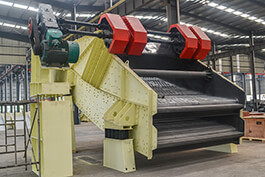
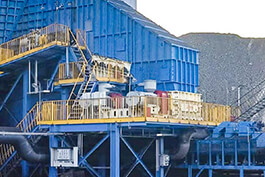
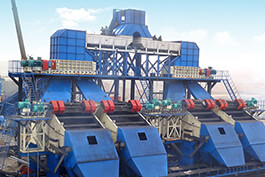
Flip Flow Screens usually adopt a two-layer screen frame structure. The bottom layer is a fixed support screen frame, and the upper layer is a flexible screen mesh frame. Under the effect of high-frequency excitation, the flexible screen frame generates nonlinear large-amplitude motion, causing the screen to constantly "flip" and "stretch", forming intense tensioning and releasing cycles. This can effectively prevent material from clogging holes and screen agglomeration, enabling the screening operation to proceed efficiently. It is widely applied in fields such as urban solid waste treatment, biomass fuel processing, coal screening, construction waste recycling, and post-crushing treatment in mines.
In practical industrial applications, the selection of sieve hole size is one of the key factors affecting the screening effect of Flip Flow Screens. It is directly related to the classification accuracy and processing capacity of materials, and is also closely related to the operational stability of the equipment, maintenance costs, and the smooth progress of subsequent process flows.
The range and specifications of the screen size of Flip Flow Screens
The range of basic sieve hole sizes
The sieve hole size range that Flip Flow Screen is best at handling is usually concentrated between 3mm and 30mm.
When the screen hole size is within the range of 3mm to 30mm, ordinary vibrating screens are prone to the problem of material clogging the screen holes, which leads to a sharp decline in screening efficiency. Within this particle size range, the intergranular force of the material is relatively large. Coupled with the fact that some materials may have a certain degree of viscosity or moisture, they are likely to accumulate at the screen holes, hindering the passage of other materials through the screen holes. However, some static screening equipment, although they can ensure screening accuracy, have extremely low processing capacity and cannot meet the demands of large-scale industrial production.
The high-frequency excitation of Flip Flow Screen and the alternating tensioning and relaxing movement mode of the screen can promptly remove the materials adhering around the screen holes, ensuring that the screen holes remain unobstructed all the time and making up for the deficiencies of traditional equipment in the screening of medium and fine particle sizes.
The dimensions of single-layer and double-layer screen machines
In practical applications, Flip Flow Screen designs two types of screening machine structures, single-layer and double-layer, according to different screening requirements. They each have their own characteristics in the configuration of screen hole sizes.
The typical sieve hole size of the single-layer Flip Flow Screen is concentrated between 3mm and 13mm. In the food processing industry, when conducting fine screening of materials such as grains and beans, the single-layer Flip Flow Screen can effectively separate the materials according to different particle size grades with its precise screening ability. Meet the strict requirements for the particle size of materials in the production process.
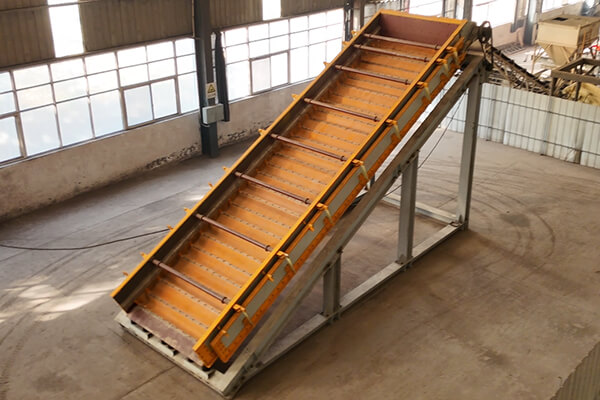
Double-layer Flip Flow Screen. The size of the sieve holes on the upper layer is usually larger, ranging from 14mm to 30mm. This layer is mainly used to remove coarse materials, prevent them from entering the lower layer of the screen, protect the lower layer of the screen plate, and also reduce the burden of subsequent screening operations. The size of the lower sieve holes follows the fine classification range, from 3mm to 13mm, for the final fine material separation. After the materials have been initially screened by the upper screen, they can be further filtered by the lower screen to more accurately separate the fine-grained materials that meet the requirements, thereby improving the quality and purity of the products.
The minimum and maximum of the sieve holes
From the perspective of material characteristics, some materials may have strong viscosity or agglomeration in the fine-grained state, which is prone to clogging at the sieve holes. Even if the Flip Flow Screen has a self-cleaning function, it is difficult to completely avoid the occurrence of this situation.
In terms of processing capacity, too small sieve holes will cause the material to pass through the sieve holes at a slower speed, thereby reducing the overall processing capacity and making it difficult to meet the demands of large-scale production.
From a cost perspective, manufacturing and maintaining small-hole screens is more challenging, requiring higher precision and better quality materials, which undoubtedly increases the cost of the equipment. Therefore, although the Flip Flow Screen can theoretically achieve screening with sieve holes smaller than 3mm, in practical applications, factors such as material characteristics, processing capacity and cost need to be carefully considered.
When the sieve hole size is greater than 30mm, the high acceleration advantage of Flip Flow Screen is not as obvious as that of other vibrating screens. As the size of the sieve holes increases, the particles of the material also become larger accordingly, and the requirements for the impact force and load of the screening equipment are higher.
In contrast, in application scenarios where the sieve hole size of Flip Flop Screen is greater than 30mm, the advantages of self-cleaning and efficient screening brought by its high acceleration cannot be fully demonstrated. Therefore, when choosing the sieve hole size, it is also necessary to consider the actual situation of the material. Weigh the performance of Flip Flow Screen under different sieve hole sizes to ensure that the device can operate in the best condition.
The effect of high acceleration and sieve hole size
Relaxation exercise
During the screening process, the screen plate undergoes alternating tensioning and relaxation movements under the action of high-frequency excitation force. This movement mode causes the screen plate to generate high acceleration. When the screen plate is in a tensioned state, the screen mesh is stretched, the size of the screen holes is relatively stable, and the material is subjected to a large inertial force on the screen surface and passes through the screen holes quickly. When the screen plate is loose, the screen mesh contracts, exerting a peeling force on the material adhering around the screen holes. This periodic tension and relaxation constantly clean the sieve holes, effectively preventing materials from adhering to the walls of the sieve holes.
Because small sieve holes are more prone to being clogged by materials, ordinary screening equipment often finds it difficult to cope. Flip Flow Screens for coal, through high-frequency relaxation and contraction movements, can promptly remove the materials blocking the screen holes, ensuring that the screen holes remain unobstructed all the time, thereby maintaining a high effective screening area.
Polyurethane screen plate
From the perspective of the shape of the sieve holes, the common shapes of polyurethane sieve plates are square and rectangular. During the screening process, square screen holes have relatively uniform retention and classification of materials, making them suitable for screening materials with strict requirements for particle size distribution. When screening construction sand, square screen holes can precisely separate sand particles of different particle size grades, ensuring the quality of construction sand. Rectangular screen holes have advantages when dealing with long strip-shaped materials or when it is necessary to improve the screening efficiency. They can make long strip-shaped materials pass through the screen holes more easily, reduce the residence time of materials on the screen surface, and improve the overall screening efficiency.
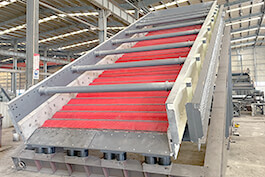
Polyurethane screen plates feature excellent wear resistance and tear resistance. The material itself has high elasticity and strength, capable of withstanding the impact and friction of materials during the screening process. Compared with traditional metal screen plates, polyurethane screen plates have better flexibility. Even when subjected to significant impact forces, they are less likely to tear, ensuring the structural integrity of the screen plate and the stability of its screening performance.
Factors influencing the selection of sieve hole sizes
The moisture content and viscosity of the material
When the material has a high viscosity, the interaction force between its particles increases, making it easy for them to aggregate and form lumps. During the screening process, these clumpy materials are around the screen holes, hindering other materials from passing through them, which leads to screen hole blockage and seriously reduces the screening efficiency and processing capacity. When dealing with highly viscous materials, the actual size of the sieve holes selected may need to be slightly enlarged.
For materials with high moisture content, water will form a water film on the surface of the material particles, increasing the surface tension of the material and enhancing the adhesion between the material particles, making them more likely to aggregate together and thus clog the screen holes. The high-frequency excitation of Flip Flow Screens and the alternating tensioning and relaxing movement mode of the screen can generate a powerful impact force, effectively breaking the agglomerated structure between materials, enabling the materials to disperse and move rapidly on the screen surface, thereby reducing the influence of moisture on screening.
The particle size requirements of the target product
The selected sieve hole size directly determines the proportion of materials with particle sizes smaller than this size in the product under the sieve. This proportion is crucial for subsequent production processes as it must meet the requirements of downstream crushing, grinding or recycling processes.
In the mineral processing procedure, the ore that has undergone initial crushing needs to be sieved for particle size classification so that it can subsequently enter the grinding process. If the size of the sieve holes is too large, it will cause a large amount of coarse granular materials to enter the under-screen products. These coarse granular materials are difficult to be fully ground fine during the grinding process, affecting the grade and recovery rate of the concentrate.
Conversely, if the size of the sieve holes is chosen to be too small, although it can ensure that the particle size of the product under the sieve meets the requirements, it will reduce the screening efficiency and processing capacity, and increase the production cost. Therefore, when choosing the size of the sieve holes, it is necessary to precisely determine the size of the sieve holes based on the specific requirements of the downstream process for the particle size of the material, comprehensively considering factors such as screening efficiency, processing capacity and product quality, to ensure the efficient operation of the entire production process.
Specifications and configurations of Flip Flow Screen
Generally speaking, equipment with a large processing capacity usually needs to be equipped with a larger screen surface area to ensure that the materials can be fully dispersed and screened on the screen surface. In this case, to enhance the screening efficiency, larger-sized sieve holes may be selected to enable the material to pass through the sieve holes more quickly. On the contrary, for equipment with a smaller processing capacity, the screen surface area is relatively small, and the residence time of the material on the screen surface is short. At this time, smaller-sized screen holes can be selected to meet the accuracy requirements for material particle size classification.
The inclination Angle of the screen surface is usually between 20° and 30°, which directly affects the movement speed of the material on the screen surface and the thickness of the material layer. When the inclination Angle of the screen surface is large, the material will slide down the screen surface more quickly under the action of gravity, and the thickness of the material layer is relatively thin. At this time, smaller screen holes can be selected because the material can come into contact with and pass through the screen holes more quickly, reducing the possibility of clogging. When the inclination Angle of the screen surface is relatively small, the movement speed of the material on the screen surface is slower, and the thickness of the material layer is relatively thick. To ensure the screening efficiency, it may be necessary to select larger screen holes to prevent the accumulation of material on the screen surface.
Conclusion
The selection of the screen size of Flip Flow Screens requires a comprehensive consideration of multiple factors such as the characteristics of the equipment itself, the nature of the materials, and the actual engineering requirements. Although the size range of its sieve holes is usually concentrated between 3mm and 30mm, in different application scenarios, the size configuration differences between single-layer and double-layer sieve machines, as well as the minimum and maximum feasible sizes of sieve holes, all have their own key considerations.


.jpg)