Introduction
As an indispensable heavy-duty feeding equipment in mining, metallurgy, building materials and other industries, the key design parameters of Apron Feeder include but are not limited to: the material selection of the load-bearing pans/plates, thickness calculation principles, structural design, etc.
Basis and Considerations for Apron Feeder Selection
Core Functions and Applicability of Apron Feeder
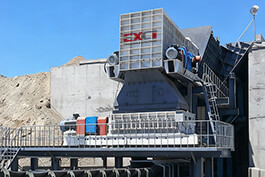
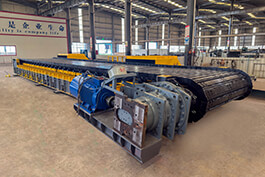
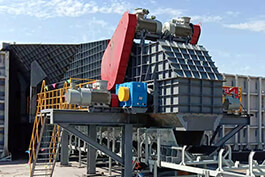
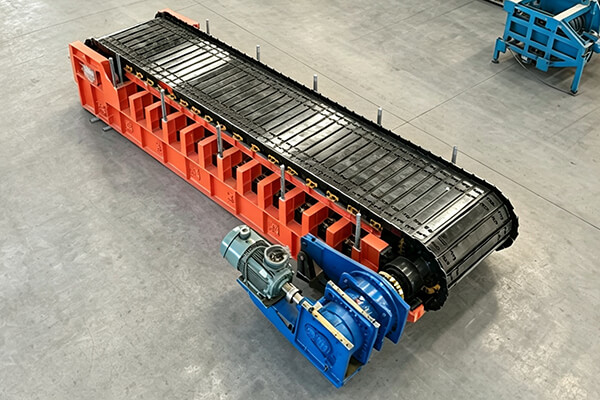
The structure of Apron Feeder consists of heavy-duty crawler-type chains, Pans/Plates, drive system, tensioning device, frame and rollers, etc. For harsh working conditions such as large lump size, high density, strong abrasiveness, high temperature or severe impact loads, its main advantages include:
Heavy-duty pans and robust supporting structures can withstand huge impact forces generated when materials are directly discharged from hoppers or dump trucks.
Key components manufactured with high-strength wear-resistant steel ensure long service life and low maintenance requirements when handling hard ores.
Through variable frequency motors (VFD) or hydraulic drive systems, the operating speed can be accurately adjusted (usually within the range of 0.05 – 0.5 m/s), achieving stable and controllable feeding to downstream equipment (such as crushers and mills), avoiding blockage or idle operation.
It can handle powdery, lump, wet sticky, and frozen materials, and through special design can handle materials with temperatures up to 600°C or even higher.
Basic Parameters for Selection
Capacity, t/h
That is the mass of material transported per unit time, which is the most core parameter determining the width, speed and power of the apron feeder.
Bulk Density, t/m³
It affects the material layer height and equipment load, and directly relates to the stress calculation of pans and chains.
Particle Size Distribution
Especially the Maximum Lump Size, which determines the minimum width of the apron feeder (usually 1.5-2.0 times the maximum lump size) and impact resistance design requirements. Complex particle size distribution may place higher requirements on anti-spillage design.
Material Characteristics
Including abrasiveness, cohesion (stickiness), moisture content, temperature, corrosion, etc.
Incline Angle
Heavy Duty Apron Feeder is usually recommended to be installed horizontally. When inclined installation is required, in order to prevent material rolling and ensure stable feeding, the inclination angle is generally limited to within 12°. For wet sticky materials, horizontal installation is also the key to preventing blockage.
Loading Method
Whether receiving materials from a hopper, chute or directly from a dump truck determines the impact load size and material flow pattern. To avoid direct impact of materials on the apron feeder, the hopper design should ensure that a certain material cushion is always maintained above the equipment.
Selection Strategies for Different Ores
Iron ore (mainly composed of hematite and magnetite, Mohs hardness approximately 5.5-6.5), copper ore (such as chalcopyrite, Mohs hardness approximately 3-4) and nickel ore (such as pentlandite, Mohs hardness approximately 4-5) are typical mining materials. Although their hardness differs, their common characteristics are high abrasiveness and the possibility of large lump sizes in the raw ore state, which place extremely strict requirements on the wear resistance and impact resistance of Apron Feeder. The core of selection lies in the material and structural strength of two key components: the load-bearing pans and drive chains.
Material and Thickness of Trough Pans/Plates
High-strength low alloy steel
16Mn (Q345B) or similar grades of manganese steel are the most commonly used materials for Apron Feeder pans. They have good comprehensive mechanical properties, especially good impact toughness and weldability, with relatively low cost.
To improve wear resistance, key areas of the pans (such as material contact surfaces and side edges) are usually subjected to high-frequency hardening treatment, making the surface hardness reach HRC 40-45. It is suitable for handling medium-hard materials (such as some copper ores and low-grade soft iron ores) and feeding applications with less severe impact loads in secondary or tertiary crushing stages.
Wear-resistant steel plate
When handling high-hardness and highly abrasive ores (such as high-grade hard iron ore and nickel ore containing quartz veins), the wear resistance of 16Mn may be insufficient. Professional wear-resistant steel plates should be selected. Through special chemical composition design and heat treatment processes, they achieve extremely high overall hardness and wear resistance while maintaining certain toughness.
The selected grade depends on the ratio between wear and impact. Higher hardness is not always better. When impact load is dominant, a lower hardness grade with better toughness should be selected to prevent brittle fracture.
It is widely used in primary feeding before mine primary crushers and can effectively resist long-term wear from high-hardness ores.
High chromium cast iron or composite liners
For extremely severe wear conditions, such as processing exceptionally hard ores, cast wear-resistant alloys can be used as pans or liners.
High chromium cast iron has relatively low toughness and is not suitable for extreme and sharp heavy impact. It is usually used in the form of bolt-fixed wear-resistant liners installed on steel pan bases with better toughness.
Thickness and Selection Principles
The thickness of Apron Feeder pans is customized according to parameters such as transported materials, bulk density and capacity. The pan thickness of heavy-duty apron feeders is usually above 20mm, while medium-duty types may be 16mm.
The pan thickness must first satisfy the bending stress requirements generated by the static load of materials under the maximum material layer height.
Impact force is directly related to material lump size, falling height and material density. The greater the impact energy, the thicker the plate should be. A 1-meter large ore block falling from a height of 10 meters and a 0.3-meter ore block falling from a height of 2 meters have completely different requirements for plate thickness.
There should be sufficient support below the impact point. Heavy-duty rollers support the pans below, and reasonable roller spacing can effectively distribute impact forces and reduce the requirements for plate thickness.
In addition to strength requirements, thickness must also include sufficient wear allowance. According to the ore abrasiveness grade and the customer's expected service life (such as replacement cycle), additional thickness should be added based on meeting strength requirements.
Conclusion
For different working conditions and material characteristics, a scientific and reasonable Apron Feeder selection scheme should be developed. During the selection process, core parameters such as material lump size, density, hardness, abrasiveness and feeding conditions should be considered. The pan material, thickness and structural design should be matched accordingly, while also considering the power configuration of the drive system and the impact resistance design of the overall structure. Only in this way can the performance of the Apron Feeder be fully utilized and the long-term stable operation requirements under extreme working conditions be satisfied.