Introduction
Wobbler Feeder, as a common screening device, is widely used in multiple industrial fields such as mining, coal, and building materials. Understanding the rotation principle of the screen shaft not only helps optimize the operational efficiency of the equipment and enhance production capacity, but also effectively reduces the equipment failure rate and extends its service life. This article will deeply explore the rotation mechanism of the Wobbler Feeder screen shaft, from the core components of the drive system, to the power transmission mode, to the working rotation and support system of the screen shaft itself, as well as daily maintenance.
Wobbler Feeder
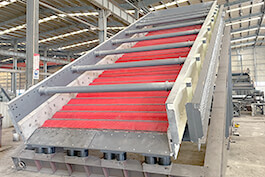
The frame structure of Wobbler Feeder is welded from steel. Its main components include the screen frame, screen shaft, transmission device and support device. The screen frame serves to protect the internal components and support the screen shaft. The screen shaft is usually arranged in parallel in multiple strands, with screen discs or screen plates of different shapes installed on the shaft. The screening gap is used to control the particle size of the material passing through. Transmission device. Common transmission methods include chain drive, gear drive, etc. Among them, chain drive is widely used in Wobbler Feeder due to its simple structure, low cost and certain buffering capacity. The support device is generally composed of a base and a shock-absorbing device. The base fixes the equipment to the ground or foundation, while the shock-absorbing device is used to reduce the impact of the vibration generated by the equipment during operation on the surrounding environment.
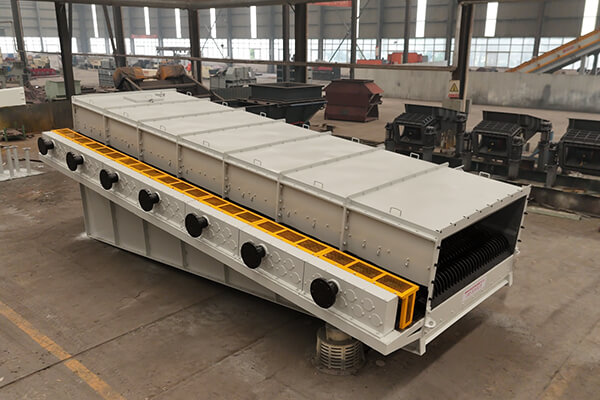
The driving system of Wobbler Feeder
Motor
In Wobbler Feeder, the common types of motors include three-phase asynchronous motors and synchronous motors. Three-phase asynchronous motors, due to their advantages such as simple structure, low cost, reliable operation and convenient maintenance, can operate stably under different working conditions and meet the screening requirements of various materials. Synchronous motors feature constant rotational speed and high power factor, making them suitable for applications where extremely high rotational speed stability is required.
When choosing an electric motor, multiple factors need to be taken into consideration. The power matching should be determined based on requirements such as the load characteristics of the Wobbler Feeder, the number of screen shafts, the nature of the materials, and the screening efficiency. The rated speed of the motor should match the input speed requirement of the reducer. At the same time, the reduction ratio of the reducer should be taken into account to ensure that the final speed transmitted to the screen shaft meets the working requirements of the equipment.
Reducer
Planetary gear reducers are often used in Wobbler Feeders where high precision and stability of equipment are required. They have the advantages of compact structure, high transmission efficiency, high precision, and large load capacity. Under the condition of transmitting the same torque, their volume and weight are smaller than those of ordinary gear reducers, and they also have higher reliability and stability.
Coupling
The coupling connects the output shafts of the motor and the reducer. Its main function is to transmit torque and compensate for any possible minor deviations and vibrations between the two shafts. During the operation of Wobbler Feeder, due to factors such as installation errors of the equipment, thermal expansion during operation, and uneven settlement of the foundation, it is difficult to ensure that the output shafts of the motor and the reducer are completely coaxial, and the coupling plays a compensating role.
When choosing a coupling, it is necessary to comprehensively consider the type and specification of the coupling based on the specific working conditions of the Wobbler Feeder, such as the magnitude of the transmitted torque, rotational speed, the alignment of the two shafts, the temperature, humidity, dust and other factors of the working environment, to ensure that it can reliably connect the motor and the reducer and guarantee the effective transmission of power. At the same time, it extends the service life of the equipment.
Power transmission
Single-axis single-motor drive mode
When the reducer is working, the output shaft drives the main sprocket to rotate. The working mechanism is relatively simple and direct, with a short power transmission path, reducing energy loss and error accumulation during the transmission process.
For high requirements of particle size classification accuracy of materials, the Wobbler Feeder driven by a single shaft and a single motor can be used. Because a single motor independently drives one screen shaft, there is no problem of speed difference among multiple motors, which can achieve extremely high synchronization, thereby ensuring the reliability and consistency of the screening results.
Multi-axis chain combination transmission mode
The multi-axis chain combination transmission mode features a sprocket installed at the end of each screen shaft, and the sprockets of adjacent screen shafts are connected in sequence through sleeve roller chains. When the reducer drives the first screen shaft (the driving shaft) to rotate, the sprocket at the end of the driving shaft drives the chain connected to it to move. The short chain then drives the sprocket at the end of the next screen shaft to rotate, thereby transmitting power to the driven shaft and causing it to start rotating.
By reasonably choosing the ratio of the number of teeth, different linear velocities can be generated between the screen shafts, thereby achieving differential rotation. Differential rotation can enhance the rubbing, loosening, crushing and tumbling effects of materials on the screen surface.
The support system of the Wobbler Feeder
Bearings and bearing housings
In some large Wobbler Feeders, due to the long Screen shaft, certain thermal expansion will occur during operation because of temperature changes. The split bearing housing can effectively compensate for this thermal expansion through its own structural adjustment, avoiding equipment damage caused by thermal stress.
For high-dust environments, bearings with good sealing performance should be given priority. The sealing structure can effectively prevent dust from entering the interior of the bearing, avoiding wear on the rolling elements and raceways by dust particles, thereby extending the service life of the bearing. At the mining site, there is a large amount of dust in the air. Using bearings with good sealing performance can ensure the long-term stable operation of Wobbler Feeder in such a harsh environment.
Sprocket guard
The sprocket guard can effectively prevent dust, foreign objects, etc. from entering the meshing part of the transmission chain and sprocket. In industrial sites such as mines and cement plants, there is a large amount of dust and particles in the air. Once these impurities enter the space between the sprocket and the chain, they will accelerate the wear of the chain and sprocket, reduce the transmission efficiency, and even cause the chain to break or the sprocket to be damaged. By installing the sprocket guard, a physical barrier can be formed to keep dust and foreign objects out, ensuring that the transmission components are always in a clean and good working environment, thereby extending their service life.
When the Wobbler Feeder is in operation, the chain and sprocket are in a high-speed rotating state. If there are no protective measures, once the operator accidentally comes into contact with these components, it is very easy to have serious safety accidents such as entanglement and scratches. The sprocket guard completely wraps the transmission components, preventing operators from directly touching the dangerous area and thus significantly reducing the probability of safety accidents.
Troubleshooting
If the chain is too loose, the chain tensioning device should be adjusted. If there is oil or impurities on the surface of the chain, it should be cleaned in time and an appropriate amount of lubricant should be reapplied.
During long-term operation, bearings may be damaged due to wear, fatigue, poor lubrication and other reasons, which will affect the normal rotation of the screen shaft. If you hear abnormal noises from the bearing area or feel a significant increase in the vibration of the screen shaft, it might be that there is a problem with the bearing.
Regularly inspect the working condition of sprockets, chains and bearings, and promptly identify and handle potential problems. Keep the equipment clean to prevent dust, impurities, etc. from entering the transmission components, and at the same time ensure the normal operation of the lubrication system to provide good lubrication conditions for the equipment.
Conclusion
The rotation mechanism of the Wobbler Feeder shaft, from the motor of the drive system to the reducer, and then to the tight fit of the coupling. The power is efficiently transmitted to the screen shaft through methods such as single-axis single-motor drive or multi-axis chain combination transmission. In the working rotation and support system of the screen shaft, the two motion forms of synchronous rotation and differential rotation meet the processing requirements of different materials.


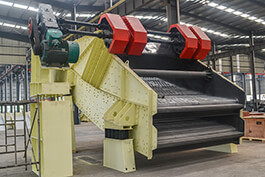
.jpg)