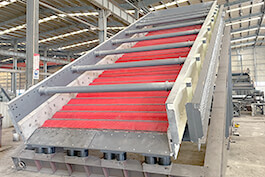
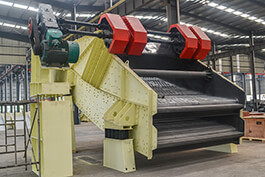
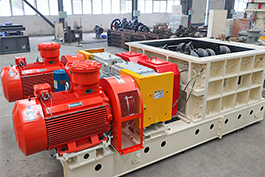
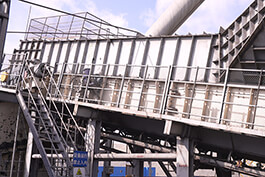
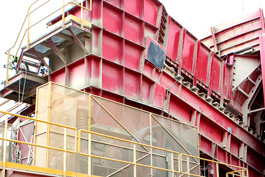
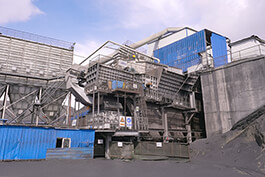
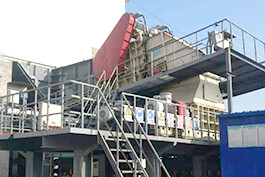
Wobbler Feeder, as a solid material screening device widely used in industries such as coal, power, metallurgy, and building materials, its screening performance is closely related to the structural and operational parameters of the equipment. Among them, the placement method of the screen surface, namely horizontal placement and inclined placement, as well as the selection of the inclined Angle, is one of the core design elements that determine the processing capacity, screening efficiency and operational stability of the equipment.
The working principle and structure of the Wobbler Feeder
The screen surface of the Wobbler Feeder is composed of multiple parallel arranged screen shafts. Each screen shaft is equipped with screen plates of specific shapes (such as disc-shaped or irregular-shaped). The shape of the screen plates is selected based on the characteristics of the screened materials and the screening requirements. The screen shafts are driven by motors to rotate in the same direction. After the materials fall onto the screen surface, under the rotation of the screen shafts The screen will exert a forward thrust and a certain flipping effect on the material. Smaller particles of materials can fall through the gaps between the screen shafts to complete the screening process, while larger particles of materials will move forward along the screen surface under the push of the screen plates and eventually be discharged from the end of the screen surface.
Two placement methods and features of Wobbler Feeder
Horizontal
Definition
The entire screen surface is parallel to the horizontal plane, and the installation inclination Angle is 0°.
Working principle and features
Under horizontal arrangement, the driving force for the forward movement of materials is completely dependent on the rotation and pushing of the screen shaft. The structure is relatively simple and the overall height of the equipment is relatively low.
Disadvantages and Applicability
Horizontal layout is usually more suitable for situations where the material is dry, has good fluidity, and there are strict restrictions on the installation height of the equipment. When dealing with overly wet or sticky materials, the materials tend to accumulate on the screen surface, increasing the resistance to forward movement and causing the materials to stay for too long. This may reduce the processing capacity and make it more likely for coal blockage faults to occur at the feeding end due to material accumulation. The horizontal screen surface also experiences relatively greater impact force from the materials at the feeding end.
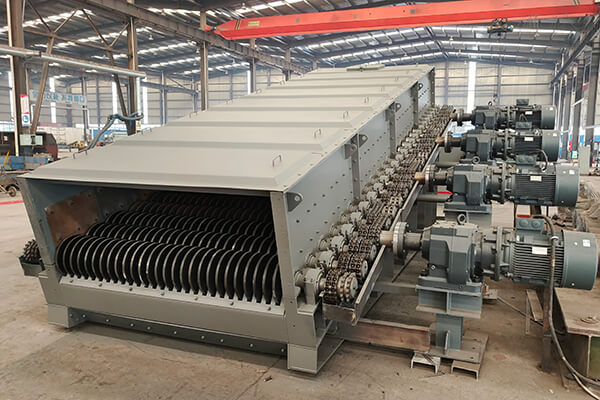
Inclined
Definition
The screen surface is installed as a whole or in sections at a certain Angle to the horizontal plane.
Working principle and features
The inclined arrangement adds a gravitational component to the forward movement of the material. The material moves forward under the dual action of the screen shaft's pushing and its own gravity, flowing more smoothly.
Core advantages
It effectively prevents the accumulation and clogging of wet and sticky materials on the screen surface, and is particularly suitable for the screening of high-moisture raw coal.
Determination of the Inclined Angle of the Wobbler Feeder
Material characteristics
Material particle size and density
For materials with fine particle size, light density and good fluidity (such as dry powder and fine sand), a larger inclination Angle (close to 30°) can be adopted to accelerate the material passage speed and increase the processing capacity. For materials with coarser particle size and higher density (such as large blocks of ore and wet coal), a smaller inclination Angle (usually less than 20°) should be adopted to prevent the material from sliding down too quickly and ensure sufficient residence time for thorough screening.
Material moisture content and viscosity
This is a key challenge in screening for industries such as coal. For materials with high viscosity and moisture content (such as wet clay and high-moisture raw coal), a smaller inclination Angle (such as 3°-8°, or even the lower limit of this range of 3°-5°) must be adopted to slow down the material flow rate, prevent fine particles from not having enough time to pass through the screen due to overly thick material layers and rapid movement, and also reduce material adhesion. Conversely, for dry and highly fluid particles, the inclination Angle can be appropriately increased to enhance the output.
Other characteristics
The packing Angle of the material, the shape of the particles, the coefficient of friction, etc. also affect its movement behavior at different inclinations.
Equipment design and screen surface parameters
Screen surface length and screen hole size
A longer screen surface can allow for a slightly larger inclination Angle, as even at a relatively fast flow rate, the material still has sufficient screening path length. The size of the sieve holes also affects the probability of passing through the sieve and needs to be adjusted in coordination with the inclination Angle.
Screen shaft speed
The inclination Angle and the screen shaft speed need to be adjusted in coordination. Increasing the rotational speed can enhance the moving capacity of the screen plates and to a certain extent, compensate for the insufficient screening time caused by excessive inclination Angle.
Conclusion
In practical industrial applications, especially in the coal and power industries when dealing with raw coal that is prone to clogging, the Wobbler Feeder with a segmented variable inclination Angle arrangement has become an effective solution to replace traditional vibrating screens and solve the problem of screening wet and sticky materials. Through reasonable Angle configuration, it achieves a dynamic balance among material flow rate, material layer thickness and screening time, ultimately reaching an efficient, stable and anti-clogging screening effect.


.jpg)