TPC is a South Korean industrial engineering company specializing in the design, manufacturing, and EPC turnkey services for bulk material conveying systems, automated production systems, and secondary battery (lithium-ion) plant projects. The client requires tubular chain conveyors for handling powdered waste lithium batteries after crushing, with a moisture content of approximately 10%.
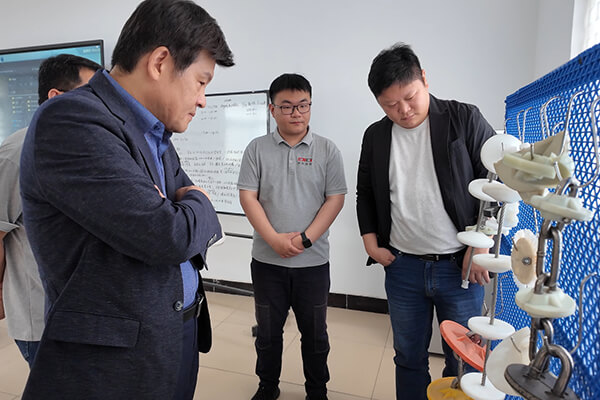
Following initial technical discussions on tubular chain conveyor technology, the client found our expertise impressive and visited our EXCT factory last week.
The client's current project involves using a tubular chain conveyor to handle lithium-containing waste battery powder with about 10% moisture content, which is neither corrosive nor abrasive. The materials in contact with the product must be made of SUS304 stainless steel piping. After undergoing a specific process step, the material temperature may exceed 80°C; therefore, the discs must be made of either PTFE (Teflon) or stainless steel.
Material Selection for Tubular Drag Conveyor Pipes
Carbon Steel
Characteristics
Carbon steel is the base material for tubular drag conveyors, offering low cost, excellent mechanical properties (such as high tensile strength), and ease of processing and welding.
Application
Suitable for conveying non-corrosive and low-abrasive materials such as grains, ores, and coal.
Limitations
Prone to rusting, not suitable for damp or corrosive environments; low surface hardness may lead to thinning of the pipe walls over time when conveying abrasive materials.
Stainless steel
Common Types
304, 316, and 316L stainless steel.
Features
High corrosion resistance (especially 316L with molybdenum, which resists chloride ion corrosion), smooth surface (reduces material adhesion), and high temperature resistance (some models can withstand temperatures above 400°C).
Application
Food and pharmaceutical industries (compliant with hygiene standards), chemical industry (acidic and alkaline materials), marine environments, etc.
Limitations
Higher cost, lower hardness than wear-resistant alloy steel; prolonged conveying of high-hardness materials may result in scratches.
Engineering Plastic POM
This material is characterized by excellent wear resistance, corrosion resistance, and anti-aging properties, making it widely applicable. POM, or polyoxymethylene, offers good mechanical performance along with outstanding dimensional stability and low-friction characteristics, making it ideal for conveying powders and granules.
Nylon
This type of material also offers excellent wear resistance and is frequently used in applications requiring high strength and durability.
Polyurethane (PU) Material
This material is commonly used in tubular drag conveyors, distinguished by its outstanding wear resistance and elasticity.
TMC (Modified PTFE Material)
Discs made from this material exhibit exceptional wear resistance and chemical stability, making them suitable for material conveying in harsh environments.
Plastic Alloy Discs
These discs combine the advantages of various plastics, offering superior overall performance.
Polymer Materials
Tubular drag conveyor discs made from various polymer composite materials generally possess excellent wear resistance, corrosion resistance, and anti-aging properties.