Overview
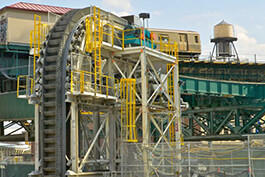
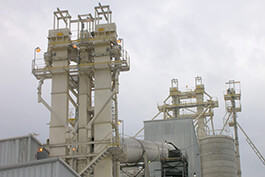
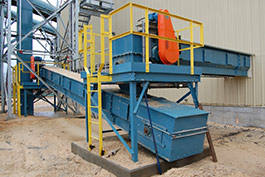
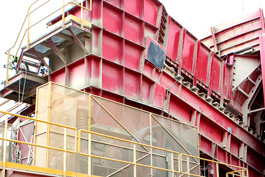
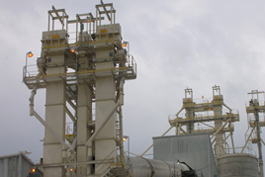
Bucket Elevator is suitable for lifting materials from lower levels to higher levels. The supply materials are fed into the hopper through the vibrating platform and the machine automatically runs continuously to transport them upwards. The conveying speed can be adjusted according to the conveying volume, and the lifting height can be selected as needed. The hopper is self-designed and manufactured, and the PP non-toxic hopper makes this type of Bucket Elevator more widely used. All sizes are designed and manufactured according to actual needs.
Working Principle
Bucket Elevator: Suitable for lifting materials from lower levels to higher levels. The supply materials are fed into the hopper through the vibrating platform and the machine automatically runs continuously to transport them upwards.
The hopper scoops up the materials from the storage below, and as the conveyor belt or chain rises to the top, it passes around the top pulley and then flips downward. The Bucket Elevator pours the materials into the Receiver slot. The belt drive usually uses rubber belts, which are installed on the lower or upper drive pulleys and the upper and lower redirecting pulleys. The chain drive usually has two parallel conveyor chains, with a pair of conveyor chain wheels on the upper or lower side, and a pair of redirecting chain wheels on the lower or upper side. Bucket Elevators are generally equipped with a casing to prevent dust from flying.
Main Components
The Bucket Elevator is composed of a hopper, a driving device, top and bottom rollers (or sprockets), a belt (or traction chain), a tensioning device, and a casing.
Rubber Belt
It is fixed to the belt opening with screws and elastic gaskets. The belt is 35-40mm wider than the hopper. Generally, the rubber belt conveyor can handle materials with a temperature not exceeding 60℃, while the heat-resistant rubber belt can handle materials up to 150℃.
Chain
The single chain is fixedly connected to the rear wall of the hopper; the double chain is connected to both sides of the hopper. The chain type elevator uses a single chain when the width of the hopper is 160-250mm, and a double chain when the hopper is 320-630mm. The main disadvantage is that the wear between the chain links is significant, increasing the frequency of maintenance.
.jpg)
Sprocket
The transmission sprocket on the Bucket Elevator. The sprocket is used to mesh with the accurately spaced blocks on the link ring or cable, and is a solid or ribbed gear that meshes with the roller chain to transmit motion. ?? Design of the sprocket teeth: The teeth of the sprocket must ensure that the chain can smoothly and freely enter and exit the meshing, minimize the impact and contact stress of the chain links during meshing, and be easy to process. The material of the sprocket should ensure that the teeth have sufficient strength and wear resistance. Therefore, the tooth surfaces of the sprocket are generally subjected to heat treatment to achieve a certain hardness.
Hopper
The core component for directly loading materials. Depending on the characteristics of the materials being transported, it is divided into deep hoppers, shallow hoppers, and guiding hoppers. The deep hopper is suitable for transporting dry, flowable, and easily scattered granular or small block materials. The hopper mouth has a larger slope, which can accommodate more materials; the shallow hopper is suitable for transporting wet, less flowable powder or small block materials, and the discharge is more convenient and clean. The guiding hopper is mainly used for the lifting operation of large pieces of materials, and its lifting stability is achieved through the guiding positioning between the hoppers.
Main features
Bucket Elevator is a vertical material transportation equipment that lifts materials vertically. It has the advantages of simple structure, low maintenance cost, high transportation efficiency, high lifting height, stable operation, and wide application range.
(1) The driving power is small. It adopts the feeding method of flowing in and the discharging method of induced discharge, and the large-capacity bucket is arranged in a dense manner. During the material lifting process, there is almost no backflow or digging phenomenon, so the ineffective power is small.
(2) The lifting range is wide. This type of elevator machine has few requirements for the type and characteristics of the materials. It can not only lift general powder and small particle materials, but also lift materials with greater abrasiveness. It has good sealing performance and causes less environmental pollution.
(3) The operation reliability is good. The advanced design principle and processing method ensure the reliability of the entire machine operation. The fault-free time exceeds 20,000 hours. The lifting height is high. The elevator machine operates stably, so it can reach a higher lifting height.
(4) The service life is long. The feeding of the elevator machine adopts the flowing-in method, and there is no need to dig the material with a bucket. There are few squeezing and collision phenomena between materials. In the design of this machine, it is ensured that there is little spillage of materials during feeding and discharging, reducing mechanical wear.
Notes for Attention
Bucket Elevator is used to vertically lift granular materials such as limestone, coal, gypsum, clinker, dry clay, raw materials, cement, and other powdery materials that have passed through the crusher.
Depending on the speed of the bucket's movement, Bucket Elevator can be classified into three forms: centrifugal discharge, gravity discharge, and mixed discharge.
The centrifugal discharge has a faster bucket speed and is suitable for transporting materials with low abrasiveness such as powdery, granular, and small block materials; the gravity discharge has a slower bucket speed and is suitable for transporting blocky, heavy, and abrasive materials such as limestone and clinker.
The traction components of Bucket Elevator include chain, plate chain, and belt. The structure and manufacturing of the chain are relatively simple, and the connection with the bucket is also very firm. When transporting abrasive materials, the wear of the chain is relatively small, but its self-weight is relatively large.
The plate chain structure is relatively sturdy and has a light self-weight, suitable for elevators with large lifting capacity. However, the hinged joints are prone to wear, and the belt structure is relatively simple but not suitable for transporting abrasive materials. Ordinary belts have a material temperature limit of no more than 60°C, steel-reinforced belts allow the material temperature to reach 80°C, and heat-resistant belts allow the material temperature to reach 120°C.
Conclusion
The type of the hopper used in a bucket elevator will affect the amount of material transported per unit time. The final transportation volume depends on a combination of factors such as the form of the hopper, the hopper speed, the specific gravity of the material, the nature of the material, and the number of hoppers.


.jpg)