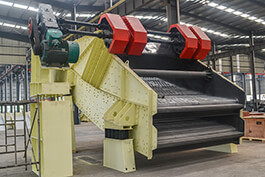
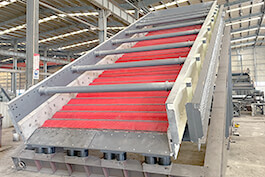
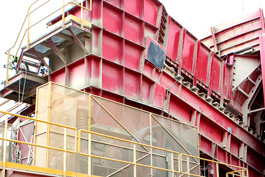
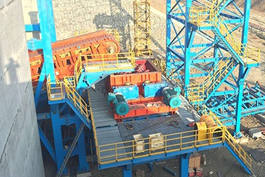
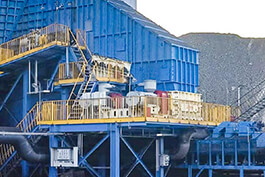
The current Wobbler Feeder can be applied to coal grading operations in industries such as coal mines and power plants. Compared with traditional vibrating screens, the Wobbler Feeder is less prone to blockage when processing wet and sticky coal, and can ensure that the processing capacity meets the requirements, enhancing the screening effect. Moreover, when used, the Wobbler Feeder does not generate vibration or noise, has a high level of equipment sealing and dust prevention, and is currently mainly used for raw coal preparation screening and fine particle removal operations.
Analysis of the Wobbler Feeder's Working Principle and Structure
Working principle
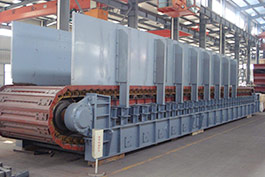
The main component of the Wobbler Feeder screen surface is the screen shaft. The screen shaft is composed of multiple parallelly arranged shafts, with screen plates attached to the top. The screen shaft rotates under the drive device, and the rotation direction is consistent with the flow direction of the material. The gap between the screen shaft and the screen plate becomes the sieve hole. Under the action of self-weight and the rotation of the screen shaft, materials smaller than the sieve hole will be screened out, while materials larger than the sieve hole will continue to move as screened-on materials, achieving the purpose of material classification.
To prevent the material from getting stuck at the screen shaft, an electrical protection function is set on the Wobbler Feeder, which can effectively protect the equipment from mechanical overload. The sieve size of the Wobbler Feeder should be adjusted in a timely manner according to the actual production requirements, either by adjusting the gap between the screen shaft or replacing the size of the screen plate.
.jpg)
Structural features
The structure of the Wobbler Feeder is very simple. It does not contain vibration components, so the noise during operation is relatively low, the maintenance work is simple, and the sieve hole is less likely to be clogged. This can effectively improve the efficiency of material screening. The screen plates are made of manganese steel and are cast. An electrical overload protection device is installed on the drive motor. If the screen shaft gets stuck, the motor control circuit can automatically alarm and protect the equipment from shutdown. The connection between the screen shaft and the reducer is mainly made of nylon rod pins. In case of possible blockage during shipment, the nylon rod pins will be cut off, thereby protecting the motor.
Structural analysis
Screen plate layout
Screen plates are mainly available in plum blossom and parabolic shapes. The screen plate is selected according to the material disturbance to better loosen the material and allow it to be conveyed along the screen surface. The parabolic-shaped screen plate has the maximum rotational deflection, and the material will be thrown forward during movement. In terms of layout, the screen plates mainly have two arrangements: parallel and staggered. The staggered arrangement can effectively avoid material blockage by relying on the fluctuation of adjacent screen plates.
Drive mode
The driving methods of the Wobbler Feeder mainly include three types. One is the single-axis single-motor driving method. When a single sieve shaft fails, the material can rely on the inertia of the inclined surface and be pushed by the previous sieve shaft to continue working over the faulty sieve shaft. However, each sieve shaft needs to be equipped with a driving device, which increases the maintenance workload.
The second is the multi-axis chain drive method. This method has a relatively small maintenance workload, but a single sieve shaft failure can easily affect the entire sieve shaft. The last one is the multi-axis linked gearbox drive method. This ensures that the sieve surface rotates synchronously to form a fluctuating sieve surface, while each sieve shaft is independent and connected to the gearbox through a coupling for transmission. When a single sieve shaft fails, the connecting pin shaft is cut off, and it will not affect the operation of the entire level of the sieve surface.
Sieve surface layout
The sieve surface layout method of the Wobbler Feeder mainly includes horizontal and inclined angle types. If the incoming coal is too wet, the sieve holes are blocked. The horizontal layout is likely to affect the fluidity of the raw coal, thereby causing coal blockage. The inclined angle method is more likely to make the material move forward, allowing the material to be fully screened.
Application of Wobbler Feeder in Coal Preparation Plants
Current Application Status
Raw Coal Screening Preparation
The primary coal classifier is a pre-classification device, and whether the screening is thorough will affect the effectiveness of the subsequent material separation process. Nowadays, with the continuous improvement of the mechanization level of underground mining machines, the end coal in the raw coal increases, and the moisture content of the raw coal can reach about 10%. Some mining faces also have mudstone, resulting in the raw coal being wet and sticky, and after entering the classifier, there may be a phenomenon of screen hole blockage. To solve the problem of screen blockage in vibrating screens, coal preparation plants began to apply Wobbler Feeder, achieving the best effect of raw coal classification.
Fine Particle Removal
The operating cost of the coal slurry treatment system in the coal preparation plant can reach 30%. Reducing the proportion of fine coal in the feed is beneficial to reducing the cost of coal preparation. Applying fine particle removal equipment can solve the problem of raw coal screening. The cross-type Wobbler Feeder, based on Wobbler Feeder, after modification, is more suitable for fine particle classification screen equipment. In contrast, cross screens can arrange the screen plates of adjacent screen shafts in an alternating pattern.
Under the rubbing action of the screen plates, fine particles are forced to pass through the screen, while coarse particles are impacted during movement, breaking up agglomerated particles, and particles adhering to the screen plates are also automatically cleaned. Currently, coal preparation plants often use cross-type Wobbler Feeder to complete the fine particle removal operation below 6m of raw coal.
Fault Handling
Before starting the Wobbler Feeder, check the bearing seat and gearbox and other parts, and check if the bolts are tightened. Confirm that the observation door has been fully closed and prohibit cleaning the equipment debris without stopping the machine.
During the initial operation of the Wobbler Feeder, focus on checking the motor current, bearing temperature, vibration or sound conditions. The cleaning blades of the screen shaft will be attached with debris, and they should be cleaned regularly.
After the equipment is stopped, check if there is any blockage on the screen surface of the Wobbler Feeder, observe the oil level of the reducer, and check the lubrication conditions of the screen shaft and bearings, etc.
Due to the easy wear of the screen plates, it is necessary to promptly check if there is any iron objects at the screen shaft to facilitate timely replacement of the screen shaft. During the operation of the Wobbler Feeder, if there are abnormal conditions such as current and vibration, stop the machine immediately to find the cause of the fault.
If the motor and reducer have abnormal vibration, check the loosening of the bolts. If there is material accumulation during the operation of the Wobbler Feeder, analyze whether it is due to the wetness and stickiness of the material or excessive debris, stop the machine to clean the screen surface, and at the same time reduce the coal feeding volume.
Conclusion
In summary, compared with traditional vibrating screens, the Wobbler Feeder is less likely to encounter clogging problems when processing wet and sticky coal raw materials, and can effectively ensure the screening effect. The Wobbler Feeder has a simple structure, no vibrating components inside, high sealing performance against dust, no dust spillage during operation, and low noise. When selecting screening equipment in coal preparation plants, the Wobbler Feeder should be given priority, as it can fully utilize the application advantages of the device in raw coal screening preparation, fine particle removal, and fault handling.


.jpg)