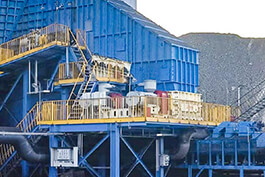
General Vibrating Screen
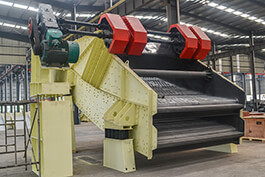
When the vibrating screen is in operation, the two motors rotate in opposite directions synchronously, causing the exciter to generate reverse excitation force, forcing the screen body to drive the screen mesh to perform longitudinal movement, so that the materials on it are subjected to the excitation force and periodically thrown forward within a certain range, thereby completing the material screening operation. It is suitable for screening sand and stone materials in quarries, and can also be used in industries such as coal selection, mineral processing, building materials, power, and chemical for product classification. The working part of the vibrating screen remains stationary, and the materials slide along the working surface to obtain screening. The fixed grid screen is a type that is widely used in mining factories, generally used for pre-sieving before coarse or medium crushing. It has a simple structure and is easy to manufacture. It does not consume power and can directly unload the ore onto the screen surface. The main disadvantages are low productivity and low screening efficiency, with a general efficiency of only 50-60%.
The working principle of the vibrating screen
The vibrating screen operates based on the compound spiral vibration generated by the excitation of the vibration mechanism. The upper rotating heavy weight of the vibration mechanism causes the screen surface to produce planar spiral vibration, while the lower rotating heavy weight causes the screen surface to produce conical spiral vibration. The combined effect of these two actions results in the screen surface generating a compound spiral vibration. The vibration trajectory is a complex spatial curve. When projected onto the horizontal plane, this curve forms a circle, and when projected onto the vertical plane, it forms an ellipse.
Vibrating Screen Classification
- According to the material's running trajectory of the vibrating screen, it can be divided into:
Based on the linear motion trajectory: Linear Vibrating Screen (the material moves forward in a straight line on the screen surface)
Based on the circular motion trajectory: Inclined Screen (the material moves in a circular motion on the screen surface) Structure and advantages
Based on the reciprocating motion trajectory: Fine Screening Machine (the material moves reciprocally on the screen surface)
- The vibrating screen can be classified into single-axis vibrating screen and double-axis vibrating screen according to the type of vibrator.
Single-axis vibrating screen uses a single unbalanced weight to excite the screen box to vibrate, with the screen surface inclined. The movement trajectory of the screen box is generally circular or elliptical.
Double-axis vibrating screen uses synchronous opposite rotation of two unbalanced weights to excite, with the screen surface horizontal or gently inclined, and the movement trajectory of the screen box is a straight line. Vibrating screens include inertia vibrating screens, eccentric vibrating screens, self-centering vibrating screens and electromagnetic vibrating screens, etc.
.jpg)
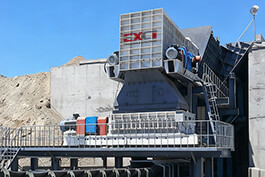
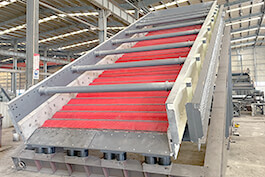
What is Inclined Screen?
Inclined Screen is a vibrating screen that performs elliptical motion trajectories. It has the advantages of high efficiency, high screening accuracy, and wide application range. Compared with ordinary screening machines of the same specification, it has a larger processing capacity and higher screening efficiency. It is suitable for solvent screening in the metallurgical industry, cold sintering ore screening in the mining industry, classification of minerals in the coal industry, as well as dehydration and desilting operations. It is an ideal substitute for existing large-scale vibrating screens and imported products from abroad. Inclined Screen is widely used in quarrying and sand and gravel screening operations. It can also be used in industries such as coal preparation, mineral processing, building materials, construction, power, and chemical for product classification.
The working principle of Inclined Screen
The Inclined Screen is a screening equipment that uses a three-axis eccentric vibration generator as the vibration source, rubber support springs as the elastic elements, and the screen box vibration generator and other components as the movable parts. The three axes of the vibrator are equipped with equal eccentric masses and the same eccentric radius of counterweight blocks. The power is transmitted from the motor through a belt to the driving shaft, and then transmitted through a gear with a speed ratio of 1 to make the three axes rotate at the same speed, thereby generating vibration force and causing the screen box to perform a forced continuous elliptical motion. The material uses this motion as the driving force, continuously throwing itself along the circular direction on the horizontal screen surface, while moving forward at the same time, completing the process of size classification and forward transportation in a repetitive manner.
Inclined Screen Performance Features
- The vibration source is an eccentric block, which has a simple and reliable structure, is easy to maintain, and has a large excitation force and high screening efficiency.
- The standardization and modularization of components are high, with good interchangeability and universality. There are only three models of vibrationers for twenty different specifications of Inclined Screen. By adjusting the number of eccentric weight blocks, the excitation force can be easily changed to adapt to various specifications of screening machines.
- All connections between the side plates, reinforcing plates, and steel pipe crossbeams are made by vibration screen-specific high-strength ring groove rivets. The rivets have high shear strength, are resistant to vibration, and do not come loose, avoiding accidents such as cracking of the side plates caused by welding defects.
- The optimized elastic elements reduce the load on the foundation and have the advantages of long service life, stable operation in the resonance zone, and low noise (the "metal spiral spring" or "composite spring" can be selected according to the usage situation).
- The tensioning structure of the screen mesh that is simultaneously tightened on the middle and both sides, and the setting of the vibration damping rubber strips for the screen mesh, make the effective service life of the screen mesh longer.
- The flexible coupling is used to connect the motor and the vibrationer, eliminating the axial force transmission of the torque, thus making the operation of the screening machine more stable.
- The use of low-alloy structural steel (Q345C) ensures the overall stiffness of Inclined Screen in cold regions as low as -40℃.


.jpg)