Introduction
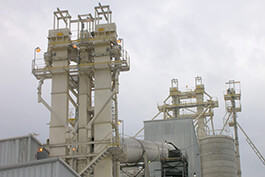
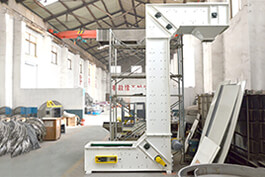
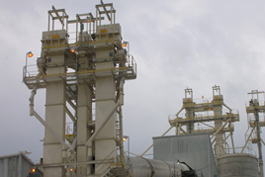
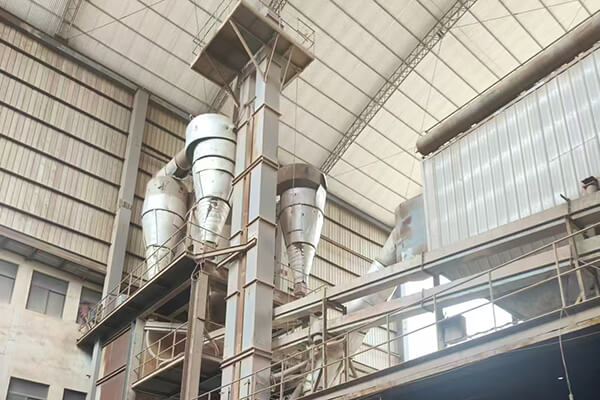
A bucket elevator is a continuous conveying machine designed for vertical material lifting, offering advantages such as high conveying capacity, great lifting height, smooth and reliable operation, and long service life. Its working principle involves buckets receiving material at the bottom inlet, being carried upward by the conveyor belt to the top, then flipping downward after passing around the top drive pulley, thereby discharging granular materials into the outlet.
Main Features of Bucket Elevator
Low Drive Power
The bucket elevator employs gravity-fed feeding, induced discharge, and a high-capacity, densely arranged bucket design. During material lifting, there is almost no backflow or digging action, resulting in minimal wasted power.
Wide Lifting Range
The bucket elevator has low requirements regarding material types and characteristics. It can handle not only common powdery and small granular materials but also highly abrasive materials. The machine features excellent sealing performance and causes minimal environmental pollution.
High Operational Reliability
Advanced design principles and manufacturing techniques ensure reliable operation, with typical trouble-free running time exceeding 20,000 hours. It offers high lifting capacity, smooth operation, and the ability to achieve significant lifting heights.
Long Service Life
Feeding in the bucket elevator is gravity-based, eliminating the need for buckets to scoop material. This minimizes compression and collision between materials, thereby extending equipment lifespan.
Common Causes of Bucket Elevator Failures
Gearbox Damage
- When the shaft power is high, a hydraulic coupling should be installed between the motor and gearbox; otherwise, hard starting may cause the high-speed shaft to break or damage the high-speed gears.
- The gearbox is undersized.
- Abnormal lubrication inside the gearbox leads to overheating or insufficient oil between gear teeth.
- Poor quality of the gearbox.
- Bearing failure within the gearbox.
Severe Material Reversal at Head Section
- Inappropriate bucket design prevents complete discharge of material.
- Insufficient bucket speed.
- Inadequate discharge height at the head section.
- Excessive clearance between the outlet lip plate and the bucket lip.
Drive Motor Failure
The primary cause of drive motor failure is overheating, which can burn out the motor. Overheating occurs due to an undersized motor design or because certain components of the bucket elevator become jammed, causing "stall" conditions. To address undersized motor power, calculate the required driving power and select a motor one or two sizes larger. Additionally, verify the reasonableness of the motor's driving power using empirical formulas.
Causes of Bucket Deformation
One factor is the compression exerted on the bucket by the compacted layer at the bottom of the machine housing and counterweights. Another factor indicates insufficient inherent stiffness of the bucket itself. The key to solving this issue lies in improving the bucket’s rigidity without significantly increasing its weight. Front-end bucket damage mainly results from wear and compression against the harder compacted layer.
Head Bearing Damage
- Undersized bearing selection leading to insufficient load capacity.
- Improper lubrication.
- Excessively high operating temperature causing lubricant degradation.
- Poor quality of the head bearing.
- Overloading operation.
Bucket Falling Off
- Bolts with insufficient strength are sheared over prolonged operation.
- Loose bolts prone to fatigue fracture.
- Jamming or impact during operation.
- Bolts and nuts tightened but not welded securely, resulting in loosening and detachment.
Common Faults and Solutions for Bucket Elevators
Measures to Address Material Reversal at the Head Section
There are many causes of material reversal at the head section of a bucket elevator, including: unreasonable bucket design that prevents complete discharge of material; insufficient rotational speed at the head; inadequate discharge height; and excessive clearance between the outlet lip plate and the bucket edge. Solutions include optimizing the bucket structure to ensure proper material ejection, appropriately increasing the rotational speed of the bucket elevator to guarantee smooth material discharge, adjusting the head section height so that the material trajectory aligns with the discharge opening, and reducing the gap between the outlet lip plate and the bucket edge to allow material to smoothly pass through into the discharge port.
Measures to Address Excessive Vibration and Noise in Bucket Elevators
Excessive vibration or noise in bucket elevators may result from several factors: insufficient installation accuracy or deviation in vertical alignment, causing misalignment between the head and tail pulleys, which leads to overall equipment vibration during operation; bucket detachment or jamming during operation, resulting in impact and vibration; partial loosening or failure of bolts connecting buckets to the belt, causing bucket misalignment and making the bucket's axis non-parallel to the vertical axis of the elevator, thereby generating lateral forces that lead to uneven loading on the belt and buckets, resulting in vibration and loud noise; and loose or deformed conveyor chains or belts that swing side-to-side during operation, causing vibration and potentially noise.
Conclusion
Bucket elevators may encounter various complex issues during operation. However, by understanding their working principles, usage characteristics, and the causes and solutions to common faults, targeted measures can be applied in practice to maintain the elevator in optimal operating condition. This ensures safe production, improves equipment utilization, and reduces downtime due to failures.