The mining industry is the foundation of modern industry, and no industry can do without it. So, as a crushing equipment in the mining industry, which materials is the
mineral sizer suitable for? Through in-depth research on the common materials in the current industry, we have found that the mineral sizer is particularly suitable for medium-hard materials that require less powder, such as coal, gypsum, potash fertilizer, nickel ore, bauxite, topsoil (overburden), etc.
Mineral sizer Features:
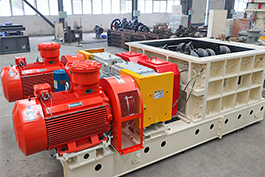
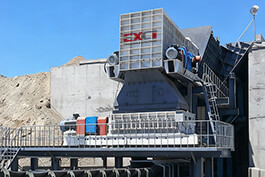
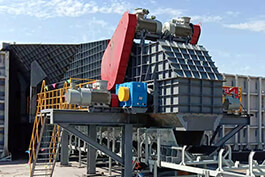
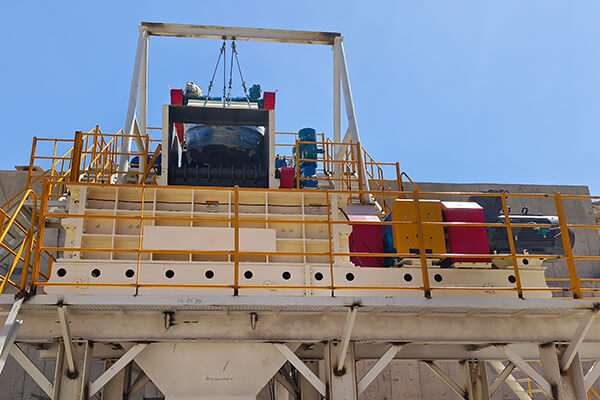
The Mineral sizer is a modern low-speed, high-torque double-toothed roller crusher. Its main working principle is to shear and stretch the material by the counter-rotating toothed rollers to cut the material rather than the traditional impact. The advantages of this are large processing capacity, uniform product particle size, low impurity rate, and good economic benefits.
This crushing mechanism ingeniously utilizes the inherent characteristics of most rock materials, that is, their compressive strength is much greater than their shear strength, and their shear strength is much greater than their tensile strength (compressive strength > shear strength > tensile strength). Therefore, the Sizer can effectively crush the material with lower energy input by applying shear and tensile stress.
This principle fundamentally differs from the jaw and gyratory crushers that mainly rely on high-intensity compression, as well as the impact and hammer crushers that rely on high-speed impact energy. According to the particle size of the processed material, the Sizer can be divided into primary crushers for processing raw ore from the mining site and secondary crushers for the second stage of crushing.
Statistical table of compressive strength of materials for
Mineral sizer:
| Material (EN) |
物料(中文) |
Typical UCS (MPa) |
Evidence Grade |
Sizer Suitability |
| Coal (ROM / Thermal / Coking) |
煤(原煤/动力煤/焦煤) |
5–35 |
A |
Excellent |
| Lignite |
褐煤 |
2–15 |
A |
Excellent |
| Oil Shale |
油页岩 |
15–60 |
A |
Good |
| Shale |
页岩 |
10–80 |
A |
Good |
| Claystone / Mudstone |
黏土岩/泥岩 |
5–50 |
A |
Excellent |
| Marl |
泥灰岩 |
10–50 |
B |
Excellent |
| Limestone (soft-medium) |
石灰石(软-中硬) |
30–120 |
A |
Excellent |
| Dolomite |
白云岩 |
50–150 |
A |
Good |
| Gypsum |
石膏 |
5–30 |
A |
Excellent |
| Phosphate Rock |
磷矿石 |
20–100 |
B |
Good |
| Potash Ore / Sylvinite |
钾盐矿 |
5–25 |
A |
Excellent |
| Rock Salt / Halite |
岩盐 |
20–40 |
A |
Excellent |
| Trona / Soda Ash Ore |
天然碱矿 |
10–35 |
B |
Excellent |
| Bauxite |
铝土矿 |
20–120 |
B |
Good |
| Lateritic Nickel Ore (Limonite) |
红土镍矿(褐铁型) |
5–40 |
B |
Excellent |
| Lateritic Nickel Ore (Saprolite) |
红土镍矿(腐殖型) |
15–80 |
B |
Good |
| Weathered Iron Ore / Limonite |
风化铁矿/褐铁矿 |
20–100 |
B |
Good |
| Soft Hematite Ore |
软质赤铁矿 |
40–120 |
C |
Conditional |
| Hard Hematite Ore |
硬质赤铁矿 |
120–250 |
C |
Poor-Conditional |
| Magnetite Ore |
磁铁矿 |
150–300 |
C |
Poor |
| Manganese Ore (soft-weathered) |
锰矿(软质/风化) |
20–100 |
B |
Good |
| Chromite Ore |
铬铁矿 |
150–300 |
C |
Poor |
| Copper Oxide Ore (weathered) |
氧化铜矿(风化) |
20–100 |
B |
Good |
| Copper Sulfide Ore |
硫化铜矿 |
80–220 |
C |
Conditional |
| Porphyry Copper Ore |
斑岩铜矿 |
80–250 |
C |
Conditional |
| Lead-Zinc Ore (soft-medium) |
铅锌矿(软-中硬) |
40–180 |
C |
Conditional |
| Gold Ore (weathered oxide) |
金矿(风化氧化矿) |
20–120 |
B |
Good |
| Gold Ore (fresh hard rock) |
金矿(原生硬岩) |
100–250 |
C |
Conditional |
| Silver Ore |
银矿石 |
60–200 |
C |
Conditional |
| Uranium Ore (sandstone-hosted) |
铀矿(砂岩型) |
20–100 |
B |
Good |
| Uranium Ore (hard rock) |
铀矿(硬岩型) |
80–220 |
C |
Conditional |
| Sandstone |
砂岩 |
40–180 |
A |
Conditional |
| Siltstone |
粉砂岩 |
20–100 |
A |
Good |
| Conglomerate (weakly cemented) |
砾岩(弱胶结) |
20–120 |
B |
Conditional |
| Basalt |
玄武岩 |
150–350 |
C |
Poor |
| Granite |
花岗岩 |
100–250 |
C |
Poor |
| Quartzite |
石英岩 |
150–300 |
C |
Poor |
| Clay (wet, plastic) |
湿黏土(塑性) |
0.5–5 |
B |
Excellent |
| Kaolin / China Clay |
高岭土 |
1–10 |
B |
Excellent |
| Bentonite |
膨润土 |
0.5–5 |
B |
Good |
| Laterite (non-nickel) |
红土(非镍) |
5–40 |
B |
Excellent |
| Gypsiferous Clay |
含石膏黏土 |
1–15 |
B |
Excellent |
| Marl with Clay |
含黏土泥灰岩 |
5–30 |
B |
Excellent |
| Soft Marl-Limestone Mix |
软质泥灰岩-石灰石混合料 |
10–60 |
B |
Excellent |
| Overburden (mixed soft rock + clay) |
覆盖层(软岩+黏土混合) |
1–50 |
B |
Excellent |
| Rejects / ROM Mixed Feed |
混合原矿/弃料 |
Variable |
B |
Excellent |
| Cement Raw Mix |
水泥生料混合料 |
5–50 |
B |
Excellent |
| Coal Gangue (soft-medium) |
煤矸石(软-中硬) |
20–120 |
B |
Good |
| Weathered Mixed Ore |
风化混合矿 |
10–80 |
B |
Excellent |
| Soft Industrial Minerals (generic) |
软质工业矿物(通用) |
5–80 |
B |
Excellent |
Mineral Sizer Selection Decision Framework:
1.Primary Evaluation: Compressive Strength of Material (UCS)
< 100 MPa: Sizer is the prime candidate. It offers comprehensive performance advantages and good economy.
100 - 200 MPa: Sizer is a strong contender. A detailed technical and economic comparison with traditional solutions (jaw crusher/cone crusher) is required.
200 - 250 MPa: Sizer is a niche solution. It should be prioritized only when there are specific pain points (such as clogging) that traditional equipment cannot address.
> 250 MPa: Beyond the conventional economic application range of Sizer. Not recommended.
2.Key Considerations: Moisture, clay content, and stickiness.
This is a "veto/plus" item. Regardless of the UCS, if the material has a significant risk of clogging and sticking, the priority of Sizer selection should be significantly increased. Evaluation indicators include: moisture content (%), plasticity index, clay mineral content, etc.
3.Secondary factors: Abrasiveness, feed size, production capacity requirements
Abrasion: It is evaluated through mineralogical analysis (such as quartz content) or abrasion index tests. High abrasion can significantly increase the operating cost of the Sizer and is a core variable in economic analysis.
Feed size and capacity:
Clearly define the maximum feed size and hourly processing capacity requirements of the mine, and select the corresponding Sizer model.
Product particle size requirements: The Sizer can provide good control of the maximum particle size, but if there are special requirements for the product particle shape (such as cubic), other equipment may need to be considered.
4.Economic analysis: Life Cycle Cost (LCC) comparison
Comprehensively compare different schemes in terms of:
Capital Expenditure (CAPEX): Equipment purchase, installation, and civil construction costs.
Operating Expenditure (OPEX):
Energy consumption, spare parts (wear and tear parts), maintenance labor, downtime losses, etc.
The final decision should be based on the scheme with the lowest LCC, rather than merely the one with the lowest initial investment.
As a technologically advanced and highly adaptable crushing device, the
Mineral Sizer has taken an indispensable position in modern mining.
By deeply understanding its performance based on the compressive strength of materials and other key characteristics, mining companies can make more informed equipment selection decisions, thereby achieving more efficient, economical and environmentally friendly mineral processing procedures.


.jpg)