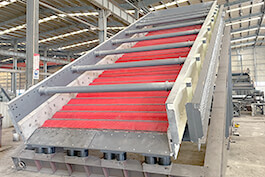
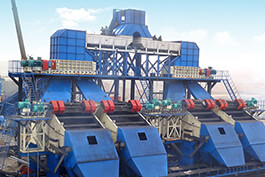
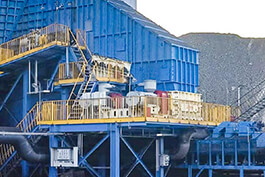
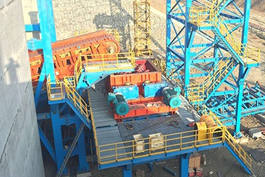
In alumina plants and bauxite mining and processing production lines, high-humidity and high-clay-content sticky bauxite has always been a difficult problem in the crushing and conveying process. The material is easy to adhere to the equipment surface, causing material sticking, blockage, slipping and even equipment jamming, resulting in frequent unplanned shutdowns of the production line.
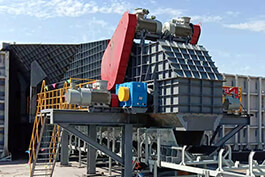
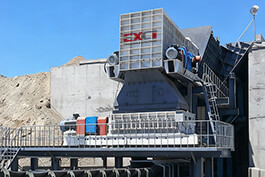
This article will deeply analyze the working principle, structural characteristics, and application of Heavy-duty Apron Feeder under high-viscosity bauxite conditions.
Problems of Traditional Feeding Equipment under Bauxite Conditions
Vibrating Feeder
High-viscosity clay ore is very easy to stick and block the feeding trough, causing the material layer to accumulate continuously, the vibration amplitude to decrease sharply, and finally completely unable to feed. Manual cleaning of the trough is required.
Belt Feeder
The impact of large-size bauxite falling material can easily puncture or damage the belt; meanwhile, sticky clay ore can cause belt slipping and deviation, resulting in high maintenance costs.
Reciprocating Feeder
The mechanism is easily blocked by sticky clay ore, causing serious overload of the drive system and frequent breakage of connecting rods.
Working Principle of Heavy-duty Apron Feeder
Rigid Forced Conveying Mechanism
The motor drives the main shaft sprocket to rotate through the coupling and reducer. The sprocket teeth closely engage with the chain pins, driving the conveying belt composed of high-strength pans to perform continuous linear movement.
Supporting and Bearing System
The pans are supported by the carrying rollers installed on the frame and return rollers, and the chain tension is adjusted through the tail tensioning device. No matter how large the bin pressure is or how high the material viscosity is, the sprocket and chain can maintain stable engagement to achieve quantitative continuous feeding.
.jpg)
Drive and Main Shaft Device
Floating Pivot Design of Right-angle Shaft
The main shaft is installed inside the output shaft of the planetary reducer and tightly connected through a locking disc. This suspended structure without foundation not only has a light weight and large speed ratio, but more importantly, it can effectively reduce additional bending moments caused by installation errors and significantly extend the service life of the transmission shaft and bearings.
Explosion-proof Variable Frequency Motor and Soft Start
A three-phase variable frequency motor combined with an electrical frequency converter soft start is adopted, which can achieve smooth starting and gradual acceleration under heavy load, reduce starting impact current, and greatly protect the motor and reducer.
High-strength Planetary Gear Reducer (P Series)
The reducer adopts involute planetary gear transmission and carburizing, quenching and grinding gear processing technology, with extremely high surface hardness and impact resistance. Combined with spiral bevel gears and helical cylindrical gears, it can output huge driving torque and easily withstand the initial starting resistance of sticky bauxite.
Pans and Traction Chain
Special Bulldozer Track Chain (Tank Chain)
The traction chain adopts high-strength track chain, with extremely small pitch error and stable operation. The chain pins are hardened, with high tensile strength and excellent wear resistance and impact resistance.
Self-lubrication and Advanced Sealing Device
The chain pins are equipped with internal self-lubrication and sealing structures, which can completely prevent fine sand and wet clay in bauxite from entering internal components, reduce 20%~30% abrasive wear, and significantly reduce maintenance costs.
Single Arc Overlapping Pans
The conveying pans are welded with low alloy steel plates. The single arc overlapping structure makes the gap between pans extremely small, with the characteristics of no material leakage, high strength and impact resistance.
Carrying Rollers and Tensioning Buffer Device
The carrying rollers are arranged at intervals on the I-shaped frame, equipped with high impact load bearings and maintenance-free self-lubrication functions. While supporting the heavy-load pans, they can also effectively prevent chain deviation.
The tail tensioning device maintains uniform tension of the two chains by adjusting the screw. When large-size bauxite impacts the pans, the built-in composite spring can instantly absorb impact force and protect the pans and shaft system from damage.
Structural Improvement Solutions for High-viscosity Bauxite
Sprocket and Main Shaft Connected by Expansion Sleeve
The connection between the main shaft and sprocket as well as carrying roller is upgraded from traditional key connection to expansion sleeve connection. The expansion sleeve connection can not only transmit larger alternating torque, but also has better corrosion resistance under harsh humid and hot environments. The on-site assembly and maintenance efficiency is increased by more than 50%.
Frame Anti-corrosion and Stress Relief Pre-treatment
The frame is welded by I-beams and channel steels. Considering the corrosiveness of high-humidity bauxite, the surface of the frame steel needs to be pre-treated by shot blasting/pickling, and overall stress relief treatment should be carried out after welding to ensure that the equipment has no deformation or cracking under long-term heavy-load operation.
Maintenance Recommendations
Strict Alignment of Coaxiality
When installing the reducer and motor, it is necessary to ensure that the output shaft and input shaft have the same concentricity. It is strictly prohibited to use a hammer for forced impact to prevent damage to bearings and gears.
Selection of Lubricating Oil
The reducer should use No.150 extreme pressure gear oil or hypoid gear oil. Mixing different grades of oil is strictly prohibited. The oil filling amount should strictly refer to the oil level mark to avoid wear caused by insufficient oil or overheating caused by excessive oil.
Regular Oil Change and Routine Inspection
After the new machine operates under load for 200 hours, the gearbox must be cleaned and new oil replaced. Afterwards, the oil should be replaced every six months. The breather plug should be checked every shift to ensure that the air hole is unobstructed and prevent oil leakage caused by internal pressure increase.
Summary
Facing high-viscosity and high-impact bauxite conditions, Heavy-duty Apron Feeder with structural optimization (adding anti-sticking scraper system, upgrading track chain sealing and expansion sleeve connection) can fundamentally solve problems such as material sticking, blockage and frequent shutdowns, and provide a stable and quantitative continuous material flow for downstream crushers and belt conveyors.


.jpg)