Introduction
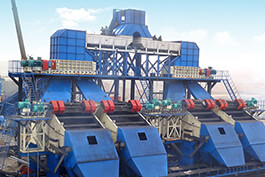
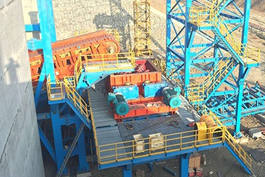
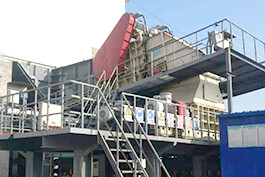
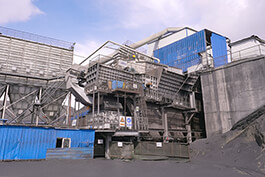
The Mineral Sizer, with its unique design featuring low speed, high torque and double toothed rollers, plays an indispensable role in the primary crushing and secondary crushing processes in the fields of coal, ores, oil shale, and industrial minerals.
As the operating time of the equipment accumulates, the crushing teeth will inevitably wear out due to the continuous impact and friction with the materials such as ores and coal gangue. The forms of wear include the rounding of the tooth tips, the abrasion of the tooth surfaces, and even fractures. This is not merely a simple surface loss; it triggers a series of chain reactions, seriously affecting the stability and economy of the crushing system.
Common wear forms of Mineral Sizer crushing teeth
Tooth Tip Wear
The sharp tooth tips of the crushing teeth gradually lose their edges under continuous impact and abrasion, becoming rounded and their height decreases.
After the tooth tip becomes rounded, its "engagement angle" increases, significantly reducing the ability to grip and pull in the materials. The materials are more likely to "slip" or "roll" above the tooth roller instead of being effectively crushed. This directly leads to a decrease in crushing efficiency and processing capacity.
As the tooth tip wear intensifies, the materials cannot be effectively crushed, resulting in a significant increase in the proportion of oversized materials in the discharged products, and the processing capacity also declines.
Tooth Surface Abrasion
The overall wear of the working surface (side) of the crushing teeth used for shearing and squeezing materials. The tooth body gradually becomes thinner and narrower, and the original geometric shape of the tooth is damaged. This wear is mainly caused by the flow, friction, and erosion of a large amount of materials between the teeth and on the tooth surface. It is particularly obvious when dealing with fine-grained materials with strong erosion.
The wear of the working surface of the Mineral Sizer crushing teeth changes the meshing relationship between the teeth and the geometric shape of the crushing chamber, which not only reduces the shear efficiency of the materials but also may change the crushing ratio. When the tooth shape changes severely, the crushing process becomes uncontrollable, increasing the possibility of excessive compression and grinding of the materials.
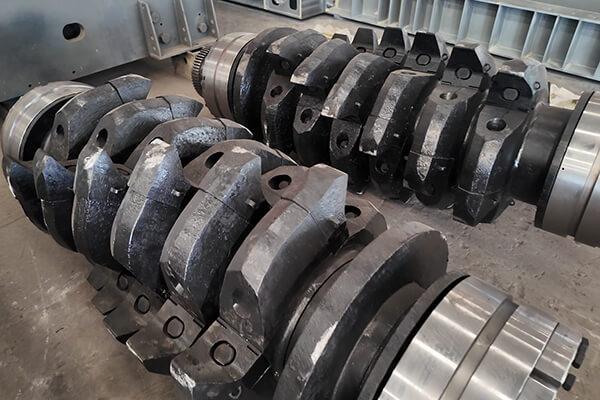
Tooth Breakage or Cracking
Manifested as visible cracks in the tooth body, or the entire tooth or a part of it falling off from the tooth seat.
Common causes
- Malignant Impact: Foreign objects such as iron impurities that are not breakable are the most direct cause of breakage.
- Ultimate Impact Load: Handling extremely large and hard material blocks beyond the design limit.
- Insufficient Material Toughness: The improper selection of the crushing tooth material, especially using extremely hard but low-toughness materials (such as unmodified high-chromium cast iron) under strong impact conditions, is prone to brittle fracture.
- Fatigue Limit: Under long-term overloading operation, fatigue cracks in the tooth root expand to a critical size, eventually leading to fracture.
Tooth breakage is a sudden failure, immediately causing severe vibration and loud noises from the mineral sizer, and local loss of crushing capacity. More seriously, the broken tooth pieces may cause secondary damage to other teeth and the tooth roller body in the crushing chamber, requiring immediate shutdown for handling. Otherwise, it will trigger more expensive cascading failures.
Uneven Tooth Wear
Different positions of the crushing teeth on the same tooth roller or between two tooth rollers show significantly different degrees of wear. For example, the teeth in the middle part of the tooth roller are severely worn, while the teeth on the sides are almost intact.
Reason analysis
- Feed Center Deviation: This is the most common reason, with the material flow continuously impacting a specific area of the tooth roller.
- Material Separation: During the feeding process, large and small pieces of materials separate, resulting in different areas of the teeth bearing different levels of impact and abrasion.
- Tooth Roller Installation Error: There is a deviation in the parallelism or center distance between the two tooth rollers, leading to uneven meshing.
Uneven wear not only leads to waste of spare parts because the entire set or entire roller needs to be replaced, even if some teeth are still usable, but also causes an uneven weight distribution in the tooth roller during rotation, generating unbalanced centrifugal force, which intensifies the vibration of the mineral sizer and damages the bearings and transmission system. At the same time, due to the inconsistent crushing gaps in different areas of the tooth roller, the uniformity of product particle size is also difficult to guarantee.
Why do the crushing teeth of the Mineral Sizer wear out?
Machining wear caused by material characteristics
| Material type |
Principal mineral composition |
Mohs hardness (typical) |
Maintenance characteristics and challenges |
| Coal |
Carbon, organic matter |
1 - 2.5 |
Relatively low abrasiveness, but the impurities of coal gangue (containing quartz, pyrite) are the main source of wear. |
| Iron ore |
Cuprite, magnetite, quartz |
5.5 - 6.5 |
High hardness, large density, strong wear resistance and impact resistance, and extremely high requirements for the material and toughness of the crushing teeth. |
| Limestone |
Calcite |
3 |
The hardness is moderate, the abrasiveness is moderate as well, and it is a relatively "friendly" type of crushed material. |
| Copper mine / Gold mine |
Copper pyrite, arsenopyrite, quartz |
3.5 - 4(Main mineral),7(Quartz) |
The abrasiveness mainly depends on the content of quartz in the surrounding rock, and the range of variation is extremely wide. |
| Red soil nickel ore |
Ferrioxalate, montmorillonite |
1 - 4 |
The hardness is not high, but the moisture content is high and the viscosity is large. It is prone to form lumps in the crushing chamber, causing abnormal compression and grinding. |
Selection of materials for broken teeth
High-Manganese Steel (e.g., ZGMn13)
This is a classic wear-resistant material. Its prominent feature is that under intense impact or compression loads, the austenite structure undergoes work hardening, resulting in a significant increase in surface hardness while maintaining high toughness in the core.
It is highly suitable for handling large pieces of materials and primary crushing conditions with high impact loads, effectively preventing macroscopic fractures caused by impact.
In cases of insufficient impact loads or sliding wear-dominated conditions, the work hardening effect is not obvious, and the wear resistance is not satisfactory. The performance may be limited when crushing certain iron ores.
Alloy Steel / Low Alloy Steel
This is obtained by adding alloying elements such as chromium (Cr), molybdenum (Mo), nickel (Ni), and vanadium (V) and achieving high initial hardness and strength through heat treatment. Its wear resistance is usually superior to that of un-hardened high manganese steel.
Its impact toughness is usually lower than that of high manganese steel, and there is a risk of fracture under extreme impact, requiring precise composition design and heat treatment processes to ensure safety.
Alloyed High-Manganese Steel
This is an improvement on traditional high manganese steel. By adding elements such as chromium (Cr), molybdenum (Mo), titanium (Ti), and vanadium (V), it maintains high toughness while increasing its initial hardness and yield strength, and improving its work hardening ability.
When crushing iron ores, the tooth plates of alloyed high manganese steel (such as ZGMn13Cr2Mo) have a lifespan approximately 50% longer than ordinary high manganese steel.
Conclusion
The wear condition of the crushing teeth of the Mineral Sizer is a key variable that directly determines the performance, reliability and economy of the crushing system. Analyzing the causes, forms and influencing factors of wear, and establishing scientific monitoring, maintenance and replacement strategies based on this is a crucial step in reducing costs and increasing efficiency, as well as ensuring stable production in the field of mine crushing.


.jpg)
.jpg)