Introduction
In the process of mineral processing, choosing an inappropriate model of wobbler feeder will not only reduce processing efficiency, increase maintenance downtime, but also lead to excessive wear of key components, thereby increasing overall production costs. Due to the differences in particle size distribution, moisture content, hardness, and clay content among different types of mineral materials, the key parameters required for wobbler feeders also vary. This article will thoroughly analyze the core factors to be considered when matching different common mineral materials, helping mining operations and engineering teams make reasonable selection decisions.
Material Characteristic Analysis
Maximum Particle Size and Particle Size Distribution
Particle size composition is a factor that needs to be considered in the design of the Wobbler Feeder's screen surface and structure, including two variables: maximum feed particle size (Dmax) and particle size distribution.
The maximum feed particle size determines the width of the screen surface. A wider screen surface can ensure that large pieces of material have sufficient lateral space on the screen surface to complete the sieving action, avoiding the situation where large pieces of material get stuck, bridge, or form a "material arch" between the screen shafts, which would cause the sieving to be interrupted. Therefore, in the actual selection of Wobbler Feeders, the design of the screen surface takes into account the effective passing area on the screen surface, the feed non-uniformity coefficient, and edge effects, leaving some margin.
The particle size distribution curve determines the expected sieving efficiency and the length of the screen surface. If the content of "difficult-to-sieve particles" close to the sieve hole size in the material is high, the sieving process will significantly slow down, and a longer screen surface length is needed to ensure sufficient residence time. The wider the particle size distribution and the higher the proportion of fine particles, the more obvious the processing efficiency advantage of the Wobbler Feeder will be; conversely, if the particle size of the material is concentrated near the sieve hole size, the efficiency of any sieving equipment will decrease.
Moisture Content and Stickiness
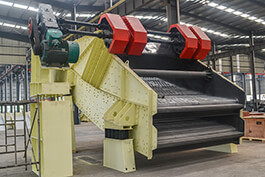
Conventional circular and linear vibrating screens rely on high‑frequency vibration to toss and slide materials on the screening deck, so as to achieve material stratification and sieve penetration. When the moisture content of materials exceeds 8%‑10%, fine‑grained materials tend to form an adhesive layer at the screen apertures. This causes screen aperture blinding and a sharp drop in screening penetration rate. As a result, the screening efficiency of vibrating screens deteriorates drastically. Frequent shutdowns for screen mesh cleaning are also required, which greatly reduces production continuity and equipment availability.
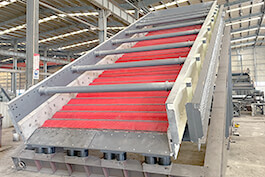
The screening mechanism of the Wobbler Feeder is fundamentally different from that of vibrating screens. Instead of loosening the material bed via vibratory tossing, the Wobbler Feeder advances materials by means of the rotational motion of screening shafts. The plum-blossom-shaped, parabolic or sinusoidal screening discs perform rolling compression, shearing conveyance and turnover action on materials. Therefore, the Wobbler Feeder does not suffer severe blinding problems when handling wet and sticky materials with a moisture content ranging from 15% to 25%.
.jpg)
Material hardness and abrasiveness
The hardness and abrasiveness of the material directly determine the material selection for the wear parts of the Wobbler Feeder, the replacement cycle, and the maintenance cost.
Coal, limestone, shale, dolomite, etc. are typical soft to medium-hard materials. Their Mohs hardness is usually between 3 and 5, and their abrasive effect on metal surfaces is relatively mild. When the Wobbler Feeder processes such materials, the wear rate of the screen plates is slow, the maintenance cost is low, and there is a wide range of material selection options for the screen shaft and screen plates. The conventional #45 steel screen shaft combined with wear-resistant cast steel screen plates can meet the lifespan requirements of most working conditions.
For high-abrasive working conditions that must use the Wobbler Feeder, special material schemes can be adopted to extend the service life. Welded screen plates made of NM400 high-strength wear-resistant steel, NM500 wear-resistant steel screen plates, and alloy steel screen plates that have undergone quenching and carburizing treatment and have a surface hardness of HRC 48-52 can all be used as optional solutions for high-abrasive working conditions.
The five core parameters of the Wobbler Feeder
Processing capacity
The process design should determine the maximum throughput capacity of the Wobbler Feeder based on the material balance calculation. Usually, it is measured in tons per hour (t/h). Special consideration should be given to the fluctuation coefficient. The incoming material volume in mines and mining areas is often uneven, and the feeding peak may reach 1.2 to 1.5 times the average value. In the design of processing capacity, a margin should be left to avoid material spillage on the screen surface and a decrease in screening efficiency under peak incoming material conditions.
Selection of screen hole size
The "screen holes" of the Wobbler Feeder are not the fixed holes on traditional screens. They are the effective passing space determined by the net gap between the adjacent two screen shafts with plum-blossom-shaped/parabolic/ sinusoidal screen plates. The screen hole size cannot be determined independently; it must be strictly matched with the incoming material requirements of the downstream crushing or separation process.
Generally, the larger the screen hole size, the larger the effective passing area on the screen surface, the higher the processing capacity, and the easier the screening efficiency can be guaranteed; conversely, the smaller the screen hole size, the smaller the net gap between the screen plates, and the higher the risk of wet and sticky materials blocking. Under the premise of meeting the downstream process requirements, the screen hole size should be taken as a larger value.
Design of screen surface size
The screen surface size includes two dimensions: screen surface width and screen surface length. The wider the screen surface, the greater the amount of material that can be spread on the screen surface at the same time, and the higher the processing capacity. The screen surface length is the time that materials stay on the screen surface. The longer the length, the longer the transportation path of fine particles on the screen surface, and the higher the probability of fine particles passing through, and the more guaranteed the screening efficiency.
For processes with high content of difficult-to-screen particles and small screen hole sizes, a larger aspect ratio of length to width should be taken to ensure sufficient screening time; conversely, for easily screened materials, the screen surface length can be appropriately shortened.
Screen shaft rotation speed and variable frequency speed regulation
By adjusting the screen shaft rotation speed, the bouncing frequency and running speed of the material on the roller can be changed, thus adapting to different moisture contents and viscosities of the materials. Strongly viscous materials should be appropriately increased in rotation speed to utilize centrifugal force to remove attached materials; when the humidity is low, the rotation speed should be appropriately reduced to reduce wear.
The speed adjustment is not unlimited: too high a rotation speed will cause fine particles not to be fully penetrated before being removed, and the screening efficiency will decrease instead; too low a rotation speed will cause material accumulation, and the processing capacity will be limited.
Material of the screen shaft and screen plate
The screen shaft and screen plate are the components with the highest wear and the most frequent replacements in the Wobbler Feeder. The material selection directly determines the maintenance cost and operational reliability of the equipment. The screen shaft, as a structural component that bears torque and bending loads, requires both rigidity, toughness, and surface wear resistance. The surface hardness of the screen shaft should not be too high to maintain necessary toughness and avoid brittle fracture under the impact of materials.
The screen plate is the wear component that directly contacts the materials. The material selection must be configured according to the erosion characteristics of the materials and the working conditions in different scenarios:
#45 steel / Wear-resistant cast steel (ZG40Mn2, etc.)
Suitable for conventional coal and limestone working conditions. Cast manganese steel screen plates have the advantages of easy shaping, low cost, and suitability for mass production, but they have a relatively high brittleness. The thickness should not be lower than 16mm to avoid brittle fracture under impact loads. Their wear resistance is moderate, and they can meet a longer replacement cycle in soft/medium-hard materials.
NM400 wear-resistant steel welding
Suitable for working conditions with highly erosive ores. The Brinell hardness of NM400 is 360-450 HBW. Its mechanical strength is 3-5 times that of ordinary low-alloy steel plates, and its toughness is better than cast manganese steel and high-chromium cast iron.
Conclusion
Choosing the appropriate Wobbler Feeder is not simply a matter of matching based on processing capacity or equipment specifications. Due to the different physical properties of various minerals, they have different requirements for sieve hole size, sieve surface structure, sieve shaft rotation speed, and wear-resistant material configuration. A comprehensive analysis of the maximum particle size, particle size distribution, moisture content, viscosity, hardness, abrasiveness, and downstream crushing process requirements of the materials is necessary.


.jpg)