Introduction
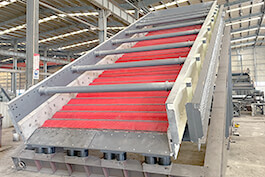
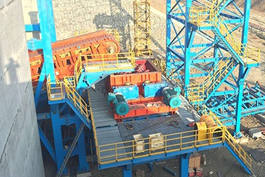
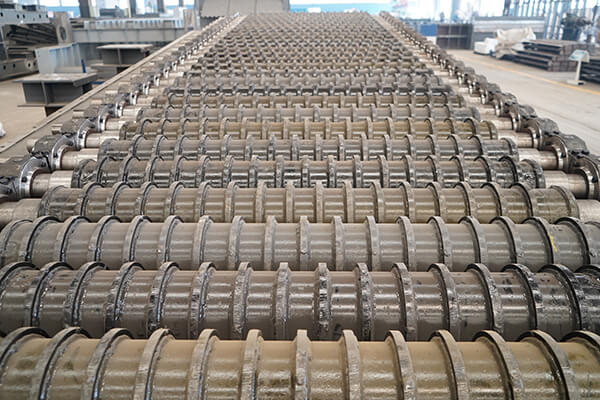
The Wobbler Feeder achieves a certain degree of self-cleaning through the rotation of the Disc. Therefore, it has an advantage in high-humidity coal screening. The Disc is the component of the Wobbler Feeder that directly comes into contact with the material and is subject to severe conditions, including high wear, strong impact, heavy load, and multi-media corrosion. In terms of material selection and process design, there are high requirements, which directly determine the overall screening efficiency and service life of the Wobbler Feeder.
Common Disc Material Classification of Wobbler Feeder
In the actual operating conditions of the Wobbler Feeder, the Disc, as the core wear-prone component that directly contacts the material and withstands strong impact and wear, its material selection and forming process directly determine the service life and screening efficiency of the equipment.
Cast manganese steel type
Cast manganese steel has a long history of application in heavy industry screening and is mainly formed by casting technology. Through sand casting or lost foam casting, complex Disc geometries can be formed in one go.
Main advantages
Easy to form and batch production: For complex star-shaped wheels, polygons, or combined screen discs with complex shapes, the casting process can achieve one-time formation of the complex shapes, which is very suitable for large-scale industrial production.
Low cost: The raw material and comprehensive production cost are relatively low, and the economic performance is good.
Main disadvantages and limitations
Thickness and structural limitations: Manganese steel relies on the "work hardening" characteristic under strong impact. To ensure its structural strength, the thickness of the Disc is usually not less than 16mm, otherwise, it is very likely to break due to local stress concentration during operation.
Poor permeability: Limited by the larger casting minimum thickness and round corners, the effective screening gap between the rollers is compressed, resulting in a relatively low material screening rate and difficult to meet the requirements of efficient fine-grained screening.
Machined steel plates and welding type
As modern Wobbler Feeder develops towards higher efficiency, lightweight, and longer service life, high-quality wear-resistant steel plates (such as NM400, Hardox 400/500, etc.) are used through CNC cutting for material production, combined with precise mechanical processing and welding assembly.
Main advantages
High screening rate and lightweight: Due to the extremely high strength of the wear-resistant steel plate, the thickness of the Disc can be made very thin (much less than the 16mm limit of cast manganese steel), which significantly increases the effective flow area between the rollers and significantly improves the screening rate of the Wobbler Feeder.
Excellent fracture resistance and wear resistance: The material has a dense internal structure and strong toughness, and is not prone to breakage under strong impact, with a long wear life.
Main disadvantages and limitations
High cost and processing difficulty: The cost of wear-resistant steel plates is high, and due to its high hardness, the cutting, forming, and welding processes require strict control (to prevent cracks by strictly controlling the welding heat affected zone).
Difficult to achieve simple automated mass production: Compared with the one-time casting of casting, welding screen plates involve multiple processes and control of welding deformation, making it difficult to achieve simple automated mass production.
Manufacturing process of Wobbler Feeder Disc
Forming process (casting or forging)
Since Wobbler Feeder Disc often has special non-circular arcs, eccentricities or multi-leaf contours, its forming method mainly depends on the material and working condition level:
Precision casting / sand casting
Using patterns to cast complex eccentric contours or cam shapes in one go, reducing the subsequent cutting volume. It is necessary to strictly control the pouring temperature and the design of the riser to prevent internal shrinkage and pores.
Die forging / free forging with rough machining
For high-strength alloy steel materials, hot die forging is carried out using large presses or forging hammers to make the internal fiber flow lines of the metal continuously distributed along the force direction of the blades, significantly improving the fatigue fracture resistance.
Heat treatment process
Wobbler Feeder Disc needs to be both wear-resistant and not too brittle during operation. Heat treatment is crucial:
Quenching + high-temperature tempering
Achieve tempered sorbite structure, making the core of the blades have extremely high strength and toughness, preventing fracture under heavy stone impact.
Surface quenching or local hardening (optional)
Carry out medium-frequency induction heating quenching or wear-resistant alloy layer stacking on the working edge or working surface to significantly increase the surface hardness (usually requiring HRC 45-55), resisting long-term erosion and wear by ores.
Stress relief annealing
Eliminate residual stress from casting or mechanical processing to prevent deformation or cracking during operation.
Mechanical processing and precision control
Wobbler Feeder is a set of equipment with roller shafts operating in tandem. The blades on adjacent roller shafts need to interlace and precisely mesh with each other, so the mechanical processing accuracy is extremely high:
Profile and outer circle precision machining
Use CNC milling machines or dedicated profiling processing equipment to ensure that the non-circular curves, eccentricity and phase angle of the blades meet the design standards, ensuring a stable gap between adjacent discs.
Center hole and keyway/ferrule machining
Strictly control the size tolerance of the center hole (such as H7) and the coaxiality and runout of the outer circle contour, and the processing of keyways or ferrules must ensure symmetry and mating accuracy to prevent loosening or shear failure under strong torque transmission.
Quality inspection and surface treatment
Non-destructive testing (NDT)
Use magnetic particle testing (MT) or ultrasonic testing (UT) to inspect surface and near-surface processing cracks.
Corrosion protection and painting
After surface shot blasting cleaning to remove oxide scale, apply anti-rust paint or wear-resistant protective layer, and mark material steel marks and product trace codes.
Conclusion
As the core component of the Wobbler Feeder, the manufacturing process of Disc involves material selection, precise forming, heat treatment strengthening, mechanical processing, and quality control. In practical applications, multiple dimensions such as the hardness of the material, humidity, feeding impact strength, as well as screening efficiency and economic cost must be comprehensively considered.


.jpg)