Introduction
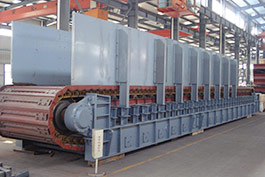
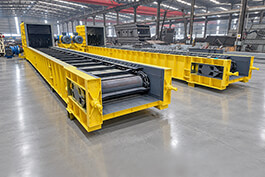
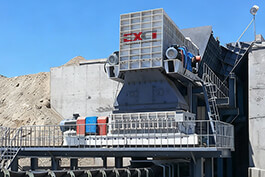
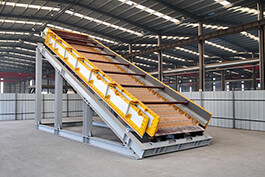
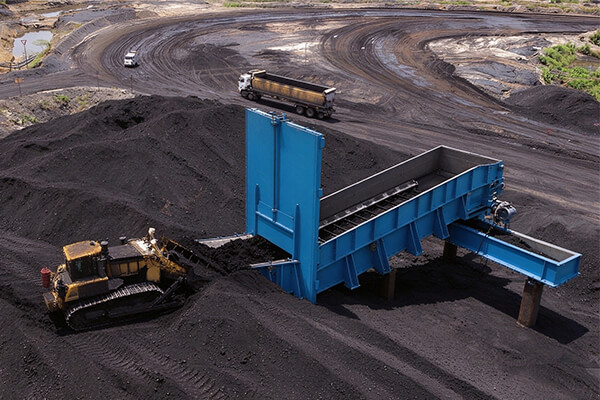
The traditional feeding system usually requires the configuration of receiving bins, feeders, and corresponding transfer equipment. The Surface Feeder can directly receive materials from mining trucks, loaders, or bulldozers, and through a continuous conveying mechanism, transport the materials to downstream crushing or conveying equipment. However, for heavy or large-volume materials, customers often have some questions: Can the Surface Feeder withstand the impact of large rocks? Will high-density materials cause equipment overload? Can the chains, supporting structure, and drive system remain stable during long-term full-load operation? In fact, whether the Surface Feeder is suitable for heavy-duty conditions cannot be determined solely by the rated processing capacity, but requires a comprehensive consideration of the equipment's supporting structure, receiving area design, chain transmission capacity, drive system configuration, and actual material characteristics.
Why do heavy materials processing place higher requirements on the Surface Feeder
Static load
When mining trucks unload coal, ore, or rock onto the Surface Feeder, the materials will form a certain thickness of accumulation layer in the equipment's receiving area. The weight of the materials is transmitted through the supporting structure to the equipment's frame and supporting components, creating a continuous static load.
For the same volume of coal and iron ore, due to different packing densities, the weight load on the equipment's supporting structure is also different. The main considerations are:
Material packing density and maximum accumulation volume.
The thickness of the material layer on the supporting surface.
The concentration of materials in the receiving area.
The structural load of the equipment during long-term full-load operation.
The strength and stiffness of the supporting structure and supporting components.
If the design of the equipment's supporting structure is insufficient, local deformation, fatigue at connection parts, and damage to supporting components may occur during long-term operation.
Dynamic impact load
In open-pit mines, mining trucks may directly unload large chunks of raw coal, rocks or ores onto the receiving area of the Surface Feeder. During the falling process, the materials will gain a certain speed, and when they come into contact with the equipment's bearing structure, impact loads will be generated.
The impact load is mainly influenced by the following factors:
The weight of a single piece of material.
The height of the material's fall.
The speed of the material's fall.
The shape and contact area of the material.
Whether the material landing point is concentrated.
Whether the receiving area is equipped with a buffer structure.
It should be particularly noted that the equipment being able to withstand a certain weight of static materials does not mean it can withstand the impact generated by the same weight of materials falling directly from a high place.
Continuous feeding under overload conditions
The Surface Feeder not only needs to withstand the weight of the materials, but also must maintain stable operation when the materials continue to accumulate. During continuous production, the chain needs to overcome the load generated by the support plate, the weight of the materials, and the resistance of the equipment operation. Especially when the equipment is started under full load, the drive system needs to provide sufficient starting torque to overcome the running resistance in the stationary state.
The main points to focus on:
The working tension of the chain under overload conditions.
The load matching of the drive motor and the reducer.
The starting torque during full-load startup.
The impact of material imbalance loading on the equipment operation.
The wear and fatigue problems during long-term continuous operation.
How does the Surface Feeder handle heavy and large-volume materials?
Strengthened receiving structure
Based on the maximum feed particle size, the weight of individual materials, and the discharging method, the structure and supporting components of the receiving area are reasonably designed to avoid local structures bearing excessive concentrated loads.
When large materials accumulate in a local area, it is prone to generate high local impact loads. Through reasonable layout of the receiving space and buffer design, the distribution of material landing points can be improved, and the risk of damage to the local structure can be reduced.
The receiving structure needs to be coordinated with the entire machine frame, the supporting structure, and the supporting components, so that the material load can be properly transferred. For Surface Feeder that directly receives the discharge from mining trucks, not only the strength of the bearing plate needs to be considered, but also the overall structure of the receiving area needs to be carefully checked.
Load-bearing structure
For heavy materials, the load-bearing structure needs to meet three requirements simultaneously:
It should have sufficient static load-bearing capacity.
It should be able to withstand the dynamic impact caused by large pieces of materials.
It should maintain structural stability during long-term operation.
If the stiffness of the load-bearing structure is insufficient, problems such as deformation of the load-bearing surface, increased local wear, and abnormal force on connection parts may occur.
In the structural design of the Surface Feeder, comprehensive calculations need to be conducted based on the weight of the materials, the thickness of the material layer, the effective load-bearing width, and the equipment support method.
For working conditions such as high-density ores and large rocks, it is also necessary to pay special attention to the local load distribution to avoid long-term operation of the equipment under unbalanced load conditions.
High-strength wear-resistant chain system
The chain needs to withstand the tension generated during the operation of the equipment. The weight of the materials, running resistance, length of the equipment, and starting conditions all affect the actual force exerted on the chain. The chain specification cannot be determined only based on the rated processing capacity of the equipment; it also needs to be verified in combination with the overall machine running resistance and driving conditions.
In the mining environment, coal, ores, and rocks may contain a large number of hard particles. Long-term operation can cause wear on the chain and related transmission components. The chain material, heat treatment process, and structural form can help reduce the impact of wear on the equipment operation.
The chain, drive sprocket, reducer, and motor need to form a reasonable transmission match. If the chain's carrying capacity is not coordinated with the drive system configuration, even if the motor power is sufficient, there may still be chain overload or damage to the transmission components.
Variable frequency drive system
The Surface Feeder adopts a variable frequency drive method, adapting to different production loads. When the processing capacity of the downstream crushing equipment changes, the operating speed of the Surface Feeder can be adjusted to change the material feeding volume. By reasonably controlling the operating speed of the equipment, the large fluctuations in the feeding volume can be reduced, allowing the downstream equipment to obtain a relatively stable material supply.
Adapt to different material characteristics. Different materials have differences in bulk density, particle size composition, and flow characteristics. Variable frequency speed regulation can provide convenience for adjusting the feeding speed under different production conditions. For heavy-load conditions, it is still necessary to ensure a reasonable load match between the motor, reducer, chain, and load-bearing structure.
What heavy or large-volume materials can the Surface Feeder handle?
Raw coal and large chunks of coal (ROM Coal)
It usually has the following characteristics:
Uneven particle size distribution.
A certain proportion of large chunks of coal.
Different mining areas have different bulk densities.
Higher moisture content in some working conditions.
The need to meet a large continuous processing capacity.
In open-pit mines, the Surface Feeder can directly receive raw coal unloaded by mining trucks or loaders and continuously transport it to the Mineral Sizer or other crushing equipment.
For large chunks of raw coal, special attention should be paid to the maximum chunk size, single-piece weight, and discharge height to ensure that the receiving structure and bearing system meet the requirements of the actual working conditions.
Large rocks and mine spoil
With large single-piece sizes, high hardness and strong abrasiveness.
Impact on the receiving area by large rocks.
Local damage to the bearing surface caused by the sharp edges of the rocks.
Load on the bearing structure by high-density materials.
Wear problems during long-term transportation.
If the materials have high impact and abrasiveness, it is necessary to determine the applicability of the equipment by strengthening the receiving structure, selecting wear-resistant materials and checking the load of key components.
The material parameters that need to be confirmed before equipment selection
|
parameters
|
Impact on equipment design
|
|
Material Type
|
Determine the basic properties of materials and applicable structures
|
|
Bulk Density
|
Determine the quality load and processing capacity
|
|
Maximum Lump Size
|
Determine the receiving area and bearing structure requirements
|
|
Particle Size Distribution
|
Judge the particle size composition and feeding state of materials
|
|
Moisture Content
|
Judge adhesion, blockage and material flow conditions
|
|
Abrasiveness
|
Determine the configuration of wear-resistant materials and vulnerable parts
|
|
Material Temperature
|
Determine the temperature resistance requirements of materials and components
|
Which factors determine the actual processing capacity of the Surface Feeder?
Effective feeding width
The effective feeding width determines the cross-sectional size of the material that the equipment can handle and transport. Under the same conditions, appropriately increasing the effective feeding width can increase the cross-sectional area through which the material passes and improve the theoretical conveying capacity. An increase in width also means that the supporting structure, chain layout, and drive system need to be matched accordingly. Simply increasing the width does not determine whether the equipment can handle heavier materials.
Material layer thickness
The thickness of the material layer directly affects the volume of material that the equipment can handle per unit time. When the material layer is too thin, the effective conveying capacity of the equipment may not be fully utilized; when the material layer is too thick, it may increase the operating load of the supporting structure and the transmission system. For heavy-duty Surface Feeder, a reasonable balance needs to be achieved between processing capacity and structural carrying capacity.
Operating speed and drive power
The operating speed of the equipment determines the distance that the material is conveyed per unit time. Under the same conditions of effective width, material layer thickness, and material density, increasing the operating speed usually can increase the theoretical processing capacity. However, the operating speed is not always the higher the better. For heavy materials, increasing the speed may lead to changes in operating resistance and drive power requirements, and it is also necessary to consider the stability of the material during the conveying process and the receiving capacity of the downstream equipment. The operating speed needs to be matched with the drive power, chain carrying capacity, and actual feeding conditions.
Conclusion
The Surface Feeder offers a continuous feeding solution for the material handling in open-pit mines through its design features such as direct feeding, heavy-duty bearing structure, high-strength wear-resistant chains, and variable-frequency drive. Applications such as direct unloading by mining trucks, impact from large pieces of material, and bearing of high-density materials, as well as continuous heavy-duty feeding, require the equipment to have a reasonable receiving structure, sufficient bearing capacity, a reliable chain drive system, and matching drive configuration. For specific projects, a comprehensive assessment still needs to be conducted based on the maximum particle size of the material, density of the pile, unloading height, processing capacity, and installation conditions.