Introduction
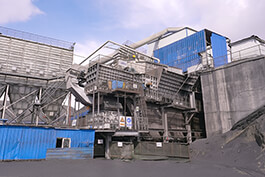
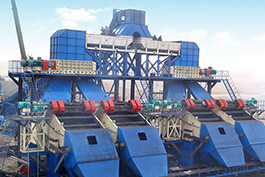
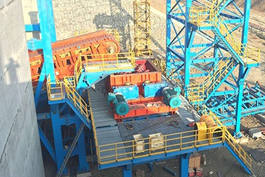
Disc screens are commonly used in applications such as raw coal pre-screening, lump coal sizing, fines removal, stone-mud separation, and construction waste screening. The screening performance is jointly determined by the shape and arrangement of the screen discs. The appropriate configuration must be determined comprehensively based on material characteristics, screening objectives, and operating conditions.
Two Arrangement Dimensions of Disc Screens
Parallel Arrangement
The screen discs on adjacent screen shafts are aligned longitudinally (in the direction of material flow). The screen openings are regular, the material path is straight, and the squeezing and shearing of lump material are the weakest, giving the best lump preservation. Lump coal and lump ore are not repeatedly bitten by the teeth between the shafts. Parallel arrangement is only suitable for applications that are dry, clean, low in fine powder, and where protecting lump material is the primary objective.
Staggered (offset-tooth) Arrangement
The screen discs on adjacent screen shafts are offset longitudinally by half a pitch, so that the discs on one shaft are positioned exactly opposite the gaps between two discs on the adjacent shaft. This provides self-cleaning capability. As the screen shafts rotate, each disc sweeps across the gap between two discs on the adjacent shaft, like two interlocking combs, actively scraping off material adhering to the disc surfaces and trapped in the gaps.
Advantages: First, it has strong resistance to clogging, wrapping, and jamming, making it suitable for difficult-to-screen materials that are sticky, wet, muddy, and high in fines. Second, the intermeshing discs continuously stir and agitate the material, resulting in more complete stratification and a higher screening rate.
Matching Between Arrangement and Disc Shape
Smooth Discs
Smooth discs provide weak agitation, and material movement relies on the incline. Parallel arrangement with equal incline (5°–8°) is preferred. In parallel arrangement, the disc faces are aligned and the screen openings are regular, maximizing the advantage of preserving lump coal. If staggered arrangement is forced, the smooth discs intermesh without teeth to scrape, which can instead trap material in the gaps and block the shafts; therefore, staggered arrangement is not recommended.
Petal Discs
Petal discs are the main disc type used in raw coal Disc screens in power plants. They use staggered arrangement, allowing adjacent petal teeth to intermesh into the gaps for self-cleaning, which helps handle fluctuations in raw coal moisture and slack coal. When the material is very dry, parallel arrangement can also be used; both horizontal and equal-incline configurations are suitable.
Oval (Sine) Discs
The wave-like stratification effect of sine discs comes from the phase difference between adjacent shafts. Staggered arrangement is standard, and equal incline (6°–10°) is preferred.
Parabolic Discs
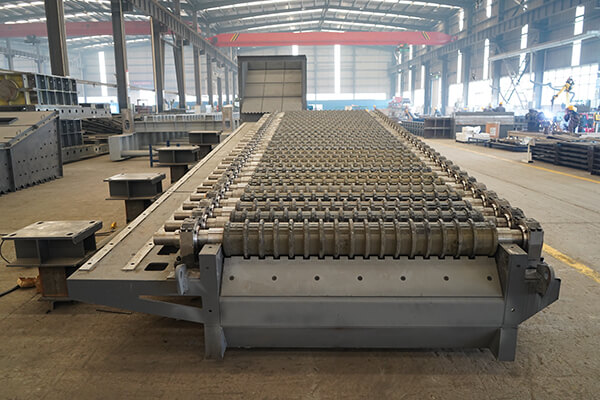
Parabolic discs have strong material-throwing capability, and material moves forward without relying on incline. Staggered arrangement is standard, and they can operate on horizontal or low-incline screening surfaces. When material movement relies on incline, the discs themselves throw the material, making them suitable for space-constrained sites that need to handle sticky, wet stone-mud materials.
Toothed/Cam Discs
Toothed discs rely on teeth to shear mud clumps and break up agglomerates. Staggered arrangement is required so that the teeth on adjacent shafts intermesh, bite, and clean each other; otherwise, the tooth gaps become filled with mud clumps. They are suitable for moderate equal incline (7°–10°).
Screen Disc Selection and Matching Parameter Reference Table
|
Screen plate shape
|
Recommended arrangement
|
Not recommended arrangement
|
Adapted screen surface inclination
|
The main reason
|
|
Smooth disc
|
Parallel
|
Interlaced
|
Equal inclination 5° - 8°
|
Low disturbance, retaining coal blocks, interlaced materials prone to getting mixed
|
|
Petal Discs
|
Interlaced
|
Parallel (only dry ingredients)
|
Horizontal / Equal inclination
|
Strong pushing of materials, achieving self-cleaning through interlacing
|
|
Elliptical (sine)
|
Interlaced
|
Parallel
|
Equal inclination 6° - 10°
|
Using phase difference to form wave-like disturbance for stratification
|
|
Parabola
|
Interlaced
|
Parallel
|
Horizontal, small inclination
|
Strongly transporting materials by throwing, not relying on inclination for material movement
|
|
Tooth shape / Cam
|
Interlaced
|
Parallel
|
Equal inclination 7° - 10°
|
Using teeth to shear the mud clumps and achieving mutual cleaning through interlacing
|
Select the type based on the operating conditions
|
Typical operating conditions
|
Recommended combination (screen plate + arrangement + inclination angle)
|
|
Pre-sieving of raw coal in power plants
|
Plum blossom-shaped screen plate + staggered arrangement + variable inclination angle (banana-shaped). The primary priority is to prevent blockages, while also considering moisture fluctuations and the screening of fines.
|
|
Classification of lump coal/lump ore, with protection for the lump materials
|
Smooth disc + parallel arrangement + equal inclination angle (5° - 8°). Sacrifice self-cleaning ability to achieve the least amount of material fragmentation.
|
|
More fine materials, requiring stratified powder removal
|
Elliptical sine-shaped screen plate + staggered arrangement + equal inclination angle (6° - 10°). Use wave stratification to allow fine powder to quickly sink and large particles to float upward.
|
|
Separation of soil and stone, as well as high-humidity clay materials and claystone
|
Parabolic or toothed screen plate + staggered arrangement + small inclination angle / horizontal. Use strong throwing or shearing to separate sticky and scattered materials.
|
|
Screening of construction waste
|
Toothed cam screen plate + staggered arrangement. Use the teeth' cutting action to break up lumps and remove impurities, without striving to preserve the lumps.
|
Conclusion
The screening performance of a Disc Screen is not determined by a single structural parameter, but by the coordinated matching of disc shape, arrangement logic, and operating conditions. In practical selection and application, it is necessary to first determine the material’s moisture and stickiness, fines content, particle size distribution, and core screening objectives, then select the appropriate disc shape and arrangement accordingly, while adjusting the screen surface inclination according to site conditions, so as to achieve a balance between anti-clogging screening, efficient material passage, and material protection.