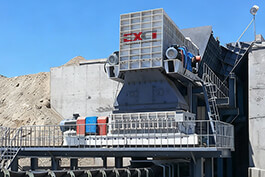
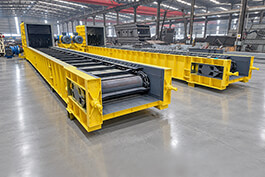
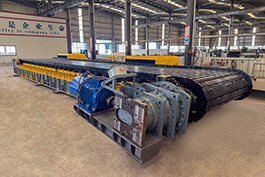
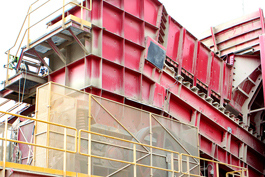
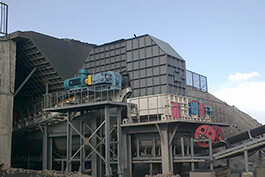
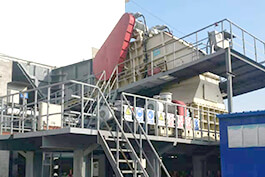
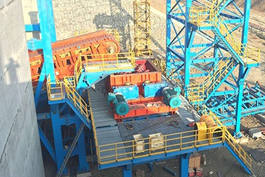
In the bulk material conveying feeding system of a mine, both Surface Feeder and Apron Feeder are heavy-duty feeding equipment, but there are significant differences in their positioning, structure, and applicable working conditions: Apron Feeder is mostly used for uniform discharge from the bottom of silos / hoppers; Surface Feeder is mostly used in open-air scenarios, for direct truck unloading and receiving materials, to buffer large impacts and receive sudden heavy loads.
What is a mine Surface Feeder
Working principle
The Surface Feeder is generally an integrated heavy-duty feeding equipment consisting of a chain plate and a large receiving hopper. It is composed of a drive sprocket, a traction chain, a supporting plate, a frame, and a buffer receiving bin. Self-unloading trucks and loaders directly dump ore and coal into its bin. The materials fall onto the chain plate, and the low-speed chain drives the materials to continuously be sent out. The large-capacity bin plays a role in storing materials and buffering, smoothing out the peak and distributing the materials evenly, converting the impact material flow dumped by the truck at one time into a stable and uniform feeding flow to supply the downstream crushers or belt conveyors. Different models can be integrated with crushing units, forming a feeding and crushing integrated machine. It can complete primary crushing while feeding.
Application scenario
The direct unloading points for trucks at open-pit mines and sandstone plants, where dump trucks directly transfer materials to the equipment;
Material extraction from the storage area and pushing the materials onto the equipment by bulldozers;
Block materials such as coal, lignite, limestone, and stripped waste rock, as well as loose materials;
Mobile crushing stations and semi-mobile crushing stations, suitable for surface operations in the open area.
Features: Resistant to instantaneous large impacts, large receiving silos, focusing on receiving materials from trucks, often made into mobile modular units.
Apron Feeder
Working principle
The Apron Feeder is composed of a drive sprocket, a closed traction chain, a skirt plate (steel plate groove) with an overlapping seal, a roller track, and a frame. It is usually installed at the bottom of the silo or ore bin, relying on the static pressure of the silo to press the materials onto the skirt plate; the chain drives the skirt plate to move slowly, and then quantitatively and uniformly pulls the materials from the silo to the crusher at a very low speed, which is controlled by frequency conversion speed regulation to regulate the feeding amount; the skirt plates overlap and seal with each other, resulting in little material leakage, and there is no relative sliding between the materials and the plates, leading to less wear.
Application scenario
Fixed feeding from the storage silos and ore troughs to the quantitative feeders;
In cement plants, beneficiation plants, and aggregate lines, stable feeding is provided from the storage silos to the primary crushers;
High temperature, highly abrasive, highly viscous, and frozen blocky ores;
Not suitable for direct dumping onto the main body by trucks; upstream is usually a storage silo, with no sudden and intense impact.
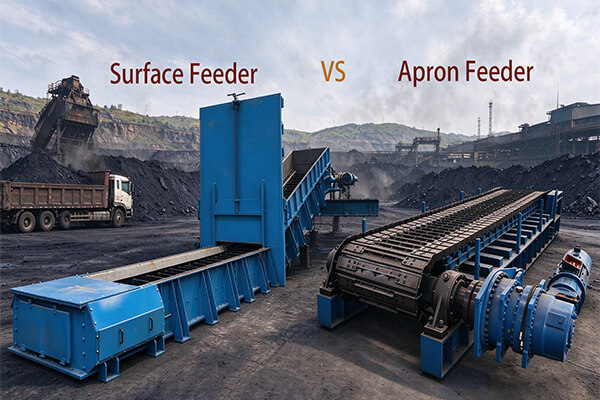
Surface Feeder vs. Apron Feeder
|
Comparison Criteria
|
Surface Feeder
|
Apron Feeder
|
|
Upstream Material Feed Method
|
Direct dumping from trucks or loaders; sudden high-impact, high-volume material surges
|
Static-pressure discharge from silos/mineral chutes; steady material flow without direct impact from truck unloading
|
|
Core Functions
|
Buffering and storage, peak smoothing, receiving intermittent truck unloading, and uniform material discharge
|
Uniform, metered, and controlled discharge from the bottom of the hopper to provide a stable feed to the crusher
|
|
Structural Features
|
Extra-large receiving hopper, designed for buffering and impact resistance; many are modular and mobile
|
Overlapping sealing skirt plates and track-supported roller structure; generally fixed installation, embedded beneath the hopper
|
|
Integrated Crushing
|
Many can be equipped with crushing rollers to form an integrated feeder-crusher unit (Feeder-Breaker)
|
Primarily used for feeding; very few models include built-in crushing functionality
|
|
Installation Locations
|
Open-air ground, truck unloading platforms
|
Bottoms of silos and hoppers
|
|
Material Impact Loads
|
Designed to withstand massive instantaneous impact loads
|
Suitable for continuous static pressure loads; not resistant to direct, violent impacts from trucks
|
|
Typical Industries
|
Open-pit coal mines, semi-mobile crushing stations at open-pit mines
|
Cement, aggregate, and mineral processing plants (feeding from fixed silos)
|
Receiving Hopper / Surge Bin
Large-capacity heavy-duty receiving hopper, side material barrier, impact-resistant wear-resistant lining (Hardox, high manganese steel), buffer beam, impact support, specially designed to withstand the instantaneous impact load caused by direct dumping of dump trucks, material barrier, diversion plate, gather and collect the materials, prevent spillage and material overflow. Function: Temporary storage, peak shaving, transforming the intermittent and intense materials in the carding process into a stable material flow.
Main Frame
Overall box-type welded heavy steel structure, modular segmented design: tail section (receiving horizontal section), middle section, head discharge section; many are a combination of horizontal + upward inclined sections, with built-in chain plate support tracks, support beams, and mobile versions have added walking wheels / tracks and hydraulic legs at the bottom; fixed type is directly pre-embedded in the foundation, and optional features include maintenance platform, guardrail, staircase, and dust cover.
Chain & Pan Assembly
Heavy-duty traction chain: Sealed heavy-duty sheet chain for excavator level, fully sealed lubrication, shock-resistant and wear-resistant; Bearing plate (Pan): High manganese steel / wear-resistant alloy plate, lap joint structure, reducing material leakage; Thicker than conventional Apron plate, with greater shock resistance capacity; Connecting plate and fastening bolt group, the chain plate rotates with the chain, carrying large materials such as ores, stripping materials, and coal.
Head Drive Unit
Variable-frequency motor (commonly used for variable-speed control, regulating the feeding volume), heavy-duty reducer, coupling, split-type driving sprocket, main shaft, heavy-duty bearing housing, torque protection device (safety pin / hydraulic coupling), anti-stuck material overload damage to the transmission. The drive is generally located at the discharge head.
Tail Take-up Unit
Tail wheels (reversing sprocket), tail shaft, bearing housing, screw tensioning or hydraulic tensioning mechanism, used to adjust the tightness of the chain and compensate for the chain wear and elongation, located at the rear end below the receiving hopper.
Auxiliary system
Cleaning device: Head scraper cleaner, for cleaning the accumulated material on the chain plate
Sealing / Dust prevention system: Side sealing plate, detachable dust cover, dust suppression and environmental protection
Lubrication system: Centralized automatic lubrication, supplying oil to the chain and bearings
Monitoring instruments: Speed sensor, blockage, deviation, temperature monitoring
Optional crushing unit: Configuring crushing rollers at the discharge end, feeding + primary crushing integrated, semi-mobile crushing stations are very common.
Conclusion
The Surface Feeder and Apron Feeder should be selected based on specific working conditions and matched with the corresponding equipment. The Surface Feeder benefits from the buffering capacity and strong shock resistance of the large receiving bin, making it the preferred choice for scenarios in open-pit mines, sand and gravel plants, etc. that rely on direct unloading by dump trucks. The Apron Feeder is more suitable for being placed at the bottom of the bin or ore trough, providing uniform and quantitative feeding services for fixed crushing stations, cement plants, and mineral processing plants, etc.