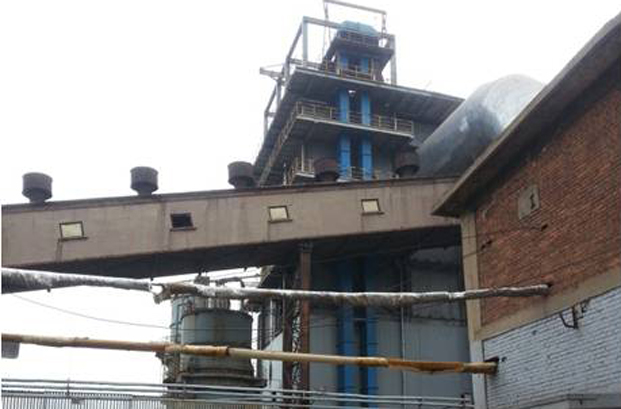
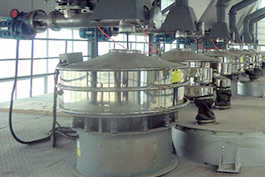
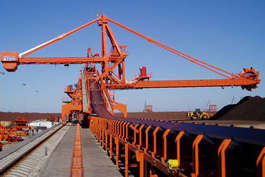
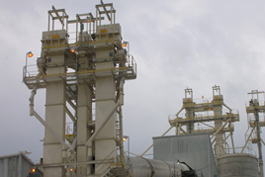
Tubular Drag Conveyors are currently one of the better conveying equipment used for bulk material (powdery or granular material) transportation. They have the characteristics of low energy consumption, low material damage, and good material adaptability. They can be widely used for various special materials, such as abrasive materials and materials with poor flowability.
Tubular Drag Conveyors are composed of a circulating chain running inside a pipeline. The two ends are respectively the drive end and the tensioning end. The main purpose of tensioning is to absorb the elongation or contraction of the chain caused by traction force, thermal expansion and cold contraction, and to prevent chain breakage caused by overload. Generally speaking, during the operation of Tubular Drag Conveyors, chain tensioning is the key factor determining whether the conveyor can operate normally. Incorrect tensioning will cause the chain to fall off, resulting in damage to the chain, sprocket and main shaft, and eventually causing the conveyor to completely stop working.
Composition of Tubular Drag Conveyor
Tubular Chain Conveyors mainly consist of transmission components, conveying components, and pipeline components. The transmission components include motor reducer, sprocket, drive shaft and drive box. The conveying components include chain and scraper. The pipeline components include pipes, corner elbows, and inlet/outlet ports. During operation, the material enters through the feed inlet and is transported through the conveying system to the discharge outlet.
The tensioning device, also called the tail box, mainly consists of sprocket, drive shaft, bearing, tensioning mechanism and box. Its core function is to adjust the tension of the chain, ensure good engagement between the chain and sprocket, and prevent chain slipping or jamming. The tensioning device has two tensioning methods: counterweight tensioning and spring tensioning. Vertical conveyors are not equipped with tensioning mechanisms. Similar to the drive box, the tensioning box is also divided into standard type, enclosed type and high-temperature type. The high-temperature type is also equipped with a bearing cooling system to adapt to special operating conditions.
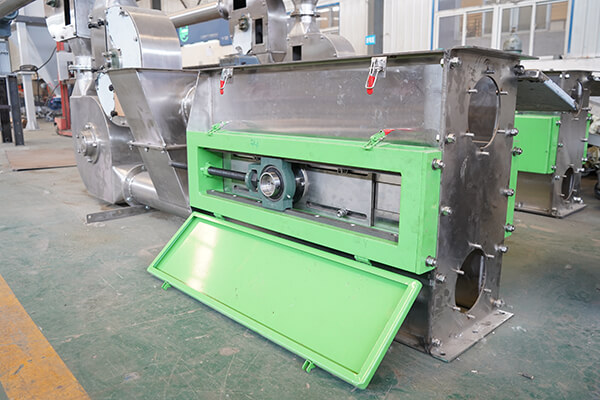
Characteristics and Operating Conditions of Tubular Chain Conveyor
Characteristics of Tubular Chain Conveyor
- Tubular Drag Conveyors are newly developed environmentally friendly material conveying equipment. They can realize enclosed continuous conveying of various materials at any angle in three-dimensional space.
- The process layout is flexible and convenient. It can achieve multiple feeding points and multiple discharge points. It has good sealing performance, can significantly improve working conditions and reduce environmental pollution. Especially in outdoor conditions without conveyor galleries, it can achieve open-air operation and save a large amount of civil construction investment.
- This equipment has a simple structure, long service life, fewer failures and quick maintenance. One machine can replace the functions of multiple traditional machines such as screw conveyors and bucket elevators. It is an ideal replacement product for screw conveyors, bucket elevators, scraper conveyors and pneumatic conveying systems.
- It is widely used in metallurgy, electric power, chemical industry, building materials and other industries.
Operating Parameters of Tubular Drag Conveyor
Applicable Materials
Material bulk density: 0.2–3.5 t/m³
Material temperature: t ≤150℃
Material particle size: ≤10mm
Moisture content: The material can be held into a ball by hand and still become loose after releasing the hand. It is suitable for conveying loose bulk materials. This equipment cannot be used for materials with large particles, flammable and explosive characteristics, chemical corrosiveness, or strong adhesion.
Installation of Tubular Drag Conveyor
Installation Support Structure
The equipment shall be installed on a fixed structure. It shall be ensured that the structure can withstand the additional load of the equipment and that the installation position is correct. Connect the pipelines and drive box, ensuring that the pipelines are straight without bending, the elbow sections are not twisted, and there is no obvious unevenness (steps) at the connected pipeline joints.
Installation of Chain
Ensure that the chain is installed in the correct direction (the conveying surface of the scraper faces the conveying direction). Ensure that the chain is not twisted in the wrong direction inside the pipeline. The chain can be routed around the drive sprocket and inserted into the pipe link by link, ensuring synchronization between the sprocket and chain and preventing incorrect chain twisting.
Chain Tightening
After checking whether the chain inside the pipe is twisted, route the end of the chain around the sprocket and connect the chain ends with the supplied connecting bolts. Keep the excess chain links (turn the excess links at both ends backward, adjust the tension properly, and then remove the excess chain links). The chain should not be installed too tight or too loose.
Chain Tension Adjustment
Open the inspection port of the Tubular Drag Conveyor and check whether the circulating chain is close to the inner circumference of the pipe. Pull the chain toward the outer circumference by hand. If it cannot be pulled, the chain is too tight and needs to be loosened.
If the circulating chain is close to the lower pipe wall, and the chain can be pulled out of the pipe by hand toward the outer circumference, the chain is too loose and needs to be tightened.
If the circulating chain is close to the lower pipe wall and can be pulled upward by hand about 5mm toward the outer circumference, the chain tension is appropriate.
The above adjustment operations should be carried out by experienced technical personnel.