Introduction
Coal is a brittle material, and its compressive strength is usually lower than that of hard rocks. Mineral Sizer fully utilizes the characteristics of coal. It breaks the material through the combined action of shearing and stretching and the differences in linear velocities at different contact points, thereby effectively controlling the upper limit of particle size and the over-crushing rate. If the conventional jaw crusher, which mainly relies on compression, is used, it is likely to crush coal blocks that could be easily separated by shearing and splitting into excessive fine powder, resulting in over-crushing.
Comparison of Equipment Principles and Technical Characteristics
Mineral Sizer: Low-speed Shearing Type Classification and Crushing
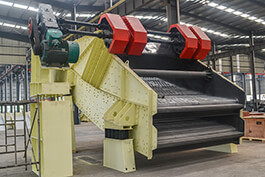
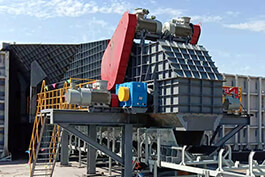
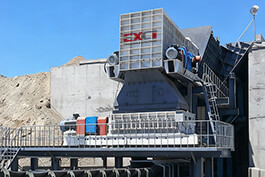
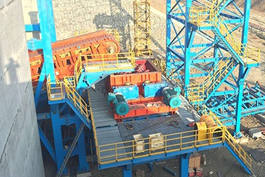
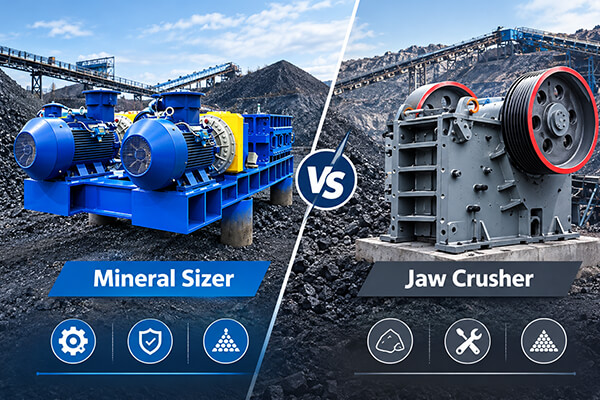
Mineral Sizer is composed of two sets of motors, hydraulic couplers, reducers, and couplings, which drive two crushing tooth rollers. It can adjust the gap between the rollers according to customer requirements. Materials with a smaller gap directly fall, thereby increasing processing capacity and minimizing over-crushing.
The core features of Mineral Sizer include: a low-speed operation design, with the rotational speed of the tooth rollers being much lower than that of jaw crushers. The overall wear of the equipment is small, the lifespan of components is longer, and the maintenance cost for long-term operation is lower; it adapts to the characteristics of brittle coal through the crushing mechanism of shear and stretch, only applying crushing force to large pieces of coal that exceed the gap, naturally screening out qualified particle size materials, reducing the risk of over-crushing at the working principle level; the overall structure is compact, occupying less installation space, and the flexibility for on-site layout and modification is stronger, capable of meeting the modular upgrade requirements of the existing production system in coal mines.
Jaw Crusher: Compression Type Coarse Crushing
The jaw crusher applies compression, bending, and friction to the material by the periodic approach and separation of fixed and movable jaw plates. The material is compressed by the jaw plates in the crushing chamber, and when the stress exceeds the strength limit, it breaks. The size of the discharge opening determines the maximum discharge particle size, which can be adjusted by changing the gap between the jaw plates.
The limitation is that the compression crushing method is prone to over-crushing of brittle coal, with a high output of fine powder, which will increase the processing burden in subsequent screening and washing processes, and the crushing chamber of the equipment is large, resulting in large fluctuations in the discharge particle size and overall low crushing efficiency, and higher energy consumption.
Comparison of Discharge Particle Size Control and Over-crushing
Mineral Sizer's Tooth Roller Gap and Three-Dimensional Particle Size Control
Mineral Sizer regulates the discharge particle size through the adjustment of the gap between the two tooth rollers. Materials smaller than the gap directly pass through the crushing chamber without being crushed. Only large pieces of coal exceeding the gap will be sheared and stretched by the tooth rollers until they meet the particle size requirements before being discharged. This working method reduces unnecessary crushing, making the discharge particle size distribution more uniform, with an over-crushing rate far lower than that of jaw crushers, and effectively improving the quality of commercial coal, reducing the processing burden of fine coal slurry in subsequent washing and processing.
The Discharge Opening of Jaw Crushers and Particle Size Distribution
Jaw crushers control the discharge particle size by adjusting the size of the discharge opening. The particle size distribution is usually wide because the compression crushing process generates random cracks in the material, large pieces of coal may break into multiple particle sizes at once, while small pieces of coal may be overly compressed. The discharge opening only controls the maximum discharge size, unable to effectively control the content of fine powder. For coal mines, this means that the final product may contain more fine powder smaller than the target particle size, affecting the value of commercial coal.
Comparison of Adaptability to High Moisture Content and Viscous Materials
Mineral Sizer's design of tooth roller shearing crushing, combined with reasonable tooth arrangement and large tooth gap, enables high-moisture and viscous materials to pass through the crushing chamber quickly along the tooth pattern, without the problem of clogging and jamming. Even if the raw coal contains some sticky impurities, it can maintain stable production efficiency without frequent shutdowns for cleaning. Meanwhile, the cutting and crushing mechanism does not allow viscous materials to be compacted and embedded in the equipment gaps, thereby reducing the risk of equipment overload and shutdown due to blockage.
The jaw crusher achieves crushing through compression. High moisture content and viscous materials are easily adhered to the jaw plates and the inner walls of the crushing chamber. As production progresses, they gradually compact and block the discharge port. This not only reduces the efficiency of crushing processing but also requires manual regular shutdown for cleaning, increasing the workload and safety risks of on-site operation. If the raw coal is highly viscous and has a high moisture content, the problem of blockage will occur more frequently, and it may even lead to the inability of the equipment to operate continuously, affecting the production rhythm of the entire mine.
Conclusion
In the application of coal mines, the advantages of Mineral Sizer over jaw crushers lie in low energy consumption, low over-crushing, precise particle size control, strong adaptability to wet and sticky materials, low maintenance costs, simplified process, and good adaptability in underground environments. Jaw crushers, on the other hand, retain their value in scenarios involving hard rock, large chunks, high amounts of coal gangue, abundant pyrite, and general coarse crushing.


.jpg)