Introduction
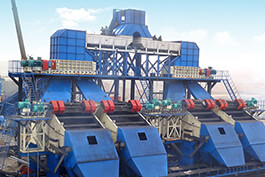
In the material handling systems of open-pit mining and underground mines, traditional solutions often require multiple independent devices to operate in series. The Feeder Breaker, a continuous operation device integrating chain scraper conveying and toothed roller crushing, with an integrated design of "receiving - conveying - crushing - discharging", has become the core hub connecting the mining system and the material handling system.
Overview of Feeder Breaker Equipment
Definition and functional positioning
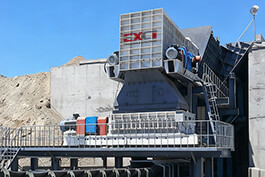
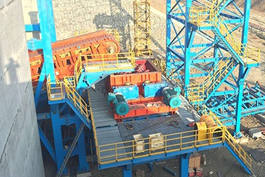
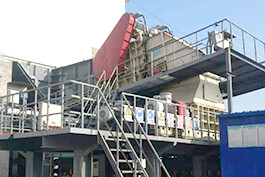
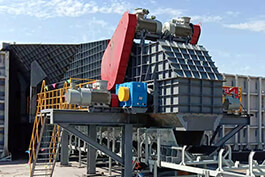
Feeder Breaker is a continuous crushing equipment that integrates the functions of material receiving, horizontal conveying, dimensional crushing and continuous discharging on a single platform. Compared with the traditional crushing scheme, Feeder Breaker is that the material enters from the feeding end and moves horizontally driven by the chain scraper conveyor. The crushing is completed when passing through the rotating toothed roller and is finally discharged from the discharging end. Throughout the process, the material does not need to be lifted vertically or transferred multiple times. In the overall layout of the mining system, the Feeder Breaker is directly connected to the unloading operations of dump trucks, bulldozers or loaders, conducting primary crushing of unscreened raw ore to produce uniformly sized materials suitable for transportation by belt conveyors.
Basic parameters of the equipment
Take the typical configuration as an example. The Feeder Breaker can crush large pieces of materials with particle sizes ranging from 800mm to 1500mm to medium particle sizes ranging from 200mm to 500mm in one go. Some high-end models can even achieve fine crushing from 100mm to 250mm. In terms of processing capacity, depending on the width of the chain plate and the specification of the crushing roller, the processing capacity of Feeder Breaker can reach several thousand tons per hour, meeting the demands of large-scale continuous production.
Core competitive advantage
Efficient production
The horizontal integrated design eliminates the intermediate transfer links. Materials form a continuous flow from feeding to discharging, significantly enhancing the overall operational efficiency.
Easy to maintain
The modular component design enables the rapid replacement of vulnerable parts such as chains, scrapers, and crushing teeth. Combined with a centralized automatic lubrication system and hydraulic tensioning device, it significantly reduces downtime for maintenance.
The working principle of chain scraper conveyor
Cycle operation mechanism and material conveying path
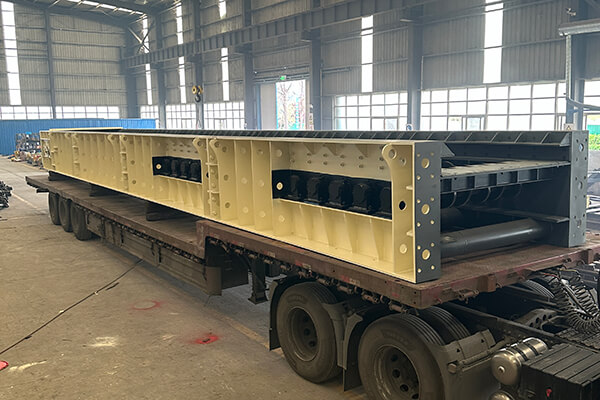
The chain scraper conveyor is the Feeder Breaker responsible for stably and continuously conveying materials from the feeding end to the crushing area. The drive unit drives the head sprocket to rotate, and the sprocket meshes with the high-strength mining circular chain to transmit power to the entire closed loop. Alloy steel scrapers are installed at intervals on the chain and slide on the wear-resistant lining at the bottom of the conveyor box, dragging the materials accumulated in the chute forward.
After the dump truck or loader loads the materials into the hopper of the Feeder Breaker, the materials first fall into the receiving section of the chain conveyor. With the start of the scraper chain, the materials are pushed by the scrapers and move along the horizontal chute at the bottom of the conveying box towards the crushing area. When passing through the crushing area, large pieces of material are intercepted and crushed by the rotating toothed rollers. Particles that meet the particle size requirements continue to be conveyed forward through the gap of the toothed rollers and are finally discharged from the discharge end to the downstream belt conveyor. The entire conveying process is completed within a closed conveying box, effectively preventing dust from escaping.
Composition of core components
Drive unit
The AC variable frequency drive system is commonly adopted, enabling the Feeder Breaker to dynamically adjust throughput according to the upstream incoming material volume and downstream processing capacity. Reducing the conveying speed can increase the residence time of materials in the crushing area, thereby obtaining finer crushed products. Conversely, increase production. The drive system is usually equipped with a torque control coupling, which automatically protects the motor and transmission components when encountering overload or material jamming.
Chains and scrapers
The chain adopts high-strength mining round link chain, which is connected into a closed loop through connecting rings. It has excellent tensile strength and wear resistance, capable of withstanding the impact and dragging of large pieces of materials. The scraper is precisely cast from alloy steel, featuring a compact structure and high strength. The scraper and the chain are connected by high-strength bolts, which makes it convenient to replace the worn parts separately.
Conveyor box
The inner wall is lined with replaceable wear-resistant plates, usually made of low-temperature protective alloy steel or high manganese steel, which directly bear the friction and wear of the material and the scraper, protecting the main structure of the conveying box.
Tensioning device
Located at the tail of the conveyor, the Feeder Breaker adopts a hydraulic adjustment device, and the chain tightness can be quickly adjusted through remote control. The core function of the tensioning device is to ensure that the chain maintains correct engagement with the head and tail sprockets, preventing chain jumping and chain sliding. Maintain the minimum gap between the chain and the base plate to reduce running resistance and prevent material jamming. Compensate for the plastic elongation of the chain during long-term operation and always maintain sufficient tension.
Toothed roller crushing mechanism
Crushing principle
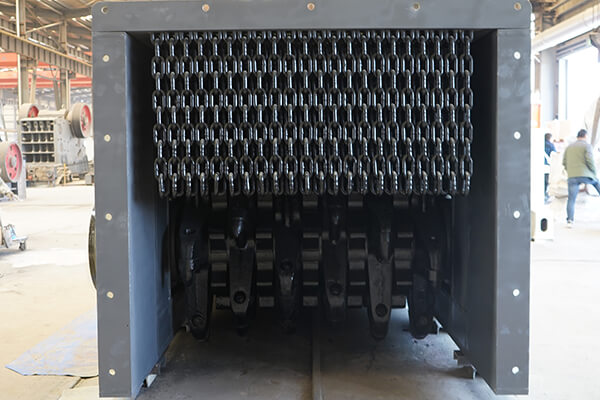
The toothed roller crushing unit is the core of the Feeder Breaker for reducing the size of materials. When large pieces of materials enter the crushing cavity between the toothed roller and the bottom plate, the rotating crushing teeth strike the surface of the materials with impact force, generating initial cracks. Subsequently, the material is drawn into the wedge-shaped space between the toothed roller and the base plate, subjected to intense squeezing, and the crack expands. For materials with high toughness, tensile force plays an auxiliary role in crushing, causing the materials to break along the natural fracture surface.
Key components
Crushing roller
The core component of the toothed roller crusher usually adopts a toothed roller structure. The surface of the drum is equipped with replaceable crushing teeth, which are made of special alloy materials through precision casting and heat treatment, featuring high strength, high wear resistance and impact resistance.
Drive unit
Power transmission is achieved through planetary bevel gears or V-belt drive. The drive system is equipped with a torque-limiting protection device. When encountering unbreakable foreign objects (such as metal blocks or wood blocks), it can promptly cut off the power to protect the crushing roller and the transmission system from damage.
Crushing box
The protective structure surrounding the crushing area is usually welded from high-strength wear-resistant steel plates, featuring a solid structure and a regular appearance. The crushing box not only prevents material splashing and dust escape during the crushing process, but also provides a safe working space for maintenance personnel.
Open-pit coal mining site
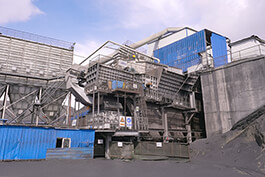
Feeder breakers are directly deployed at the edge of the mining pit or the crushing station at the pit mouth to receive raw coal unloaded by heavy-duty dump trucks. Its low body design makes it convenient for trucks to unload. Its powerful crushing capacity can break down large pieces of coal gangue to a particle size suitable for belt transportation. The pre-screening function maximizes the yield of lump coal and enhances the economic value of coal.
Summary
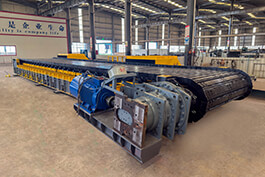
Feeder Breaker, as an efficient continuous crushing equipment integrating chain scraper conveying and toothed roller crushing, redefines the efficiency standard of primary crushing in mines with its unique integrated design concept. The chain scraper conveyor achieves stable material reception and horizontal transportation through the cyclic operation of high-strength round link chains and alloy steel scrapers. The toothed roller crusher efficiently breaks down large pieces of materials to the target particle size by means of the combined mechanical effects of impact, extrusion and stretching. The precise synergy of the two enables Feeder Breaker to demonstrate comprehensive advantages such as continuous operation, controllable particle size, energy consumption optimization and convenient maintenance in fields like open-pit mining, coal production, metal mines and the building materials industry.


.jpg)