Introduction
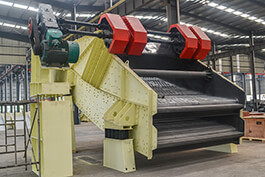
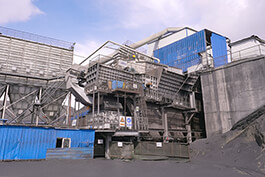
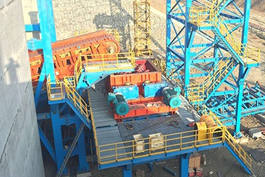
The Roller Screen is the core equipment for achieving the classification and screening of raw coal in the coal conveying system of power plants. Its performance directly affects the operational stability of the coal conveying system and the efficiency of subsequent coal processing. In response to the screening requirements for washed medium-coal and lignite with specific characteristics, this paper focuses on parameter design, structural optimization, and performance guarantee, and clearly defines the technical requirements.
Roller Screen Basic Parameters
Equipment Type: Roller Screen
Adaptable Coal Types: Washed medium coal, lignite
Rated Output: 550t/h
Sieve Separation Efficiency: ≥80%
Number of Shafts: 9
Feed Particle Size (mm): ≤300mm
Sieve Bottom Particle Size (mm): ≤30mm
Power Supply: 380V, 50Hz
Equipment Performance and Structural Requirements
The sieve separation efficiency of Roller Screen should not be lower than 80%, and the sieve surface area should be able to meet the screening requirements of the material under the rated output. It should have interlock, local and remote operation functions, and the control box is reserved for programmable control interfaces. All control box doors adopt a double-layer structure with waterproof and dustproof properties.
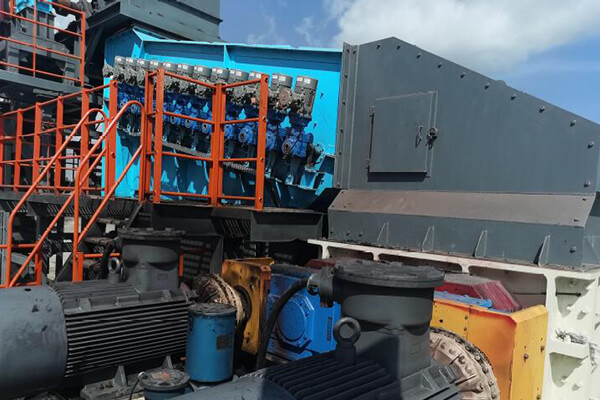
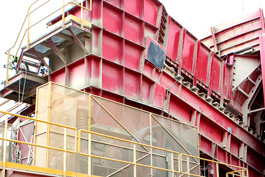
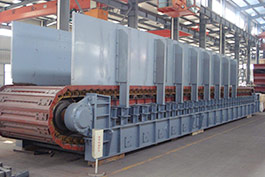
The steel structure of Roller Screen should have sufficient rigidity, strength and stability. The materials used should undergo sandblasting cleaning or acid washing before welding. The main steel structure material pretreatment grade is Sa21/2. The upper cover plate of the body is segmented, with the upper part of the cover plate being of a slightly arc-shaped style, facilitating opening and preventing water accumulation on the cover. When setting up, there should be fixed measures to prevent the components from sliding into the body due to vibration. The handles on the cover plate should be aesthetically pleasing and the cover plate should be tight without dust leakage.
The side upright plates of Roller Screen on both sides should be a segmented structure with bolt connections, facilitating maintenance, replacement of the sieve shaft, sieve plate and liner. The sieve shaft and rotating sieve plate and liner of Roller Screen should use wear-resistant materials, with a service life of no less than 7000 hours.
Each sieve shaft is driven by a roller conveyor motor separately, and each group of sieve shafts has a drive device; the reducer and the coupling of Roller Screen are connected by an elastic coupling. All sieve shafts rotate in the same direction at constant speed, and have overload capacity. The components rotate flexibly without jamming.
Each sieve shaft is equipped with electrical and mechanical dual protection. When the equipment is overloaded, the nylon safety pin of the coupling will be cut, providing mechanical protection for the reducer, and when the sieve shaft is stuck, the motor current will exceed the critical value, triggering an alarm signal, providing electrical protection.
The power of the motor should be able to meet the load start-up requirements on the sieve surface when there is coal. The sieve surface should be designed as a segmented inclined type, and the inclination angles of the sieve surface should be designed separately according to the characteristics of the feed layer section, the main screening section and the material flow out section to facilitate uniform and even flow of the coal on the sieve surface, thereby ensuring the sieve separation efficiency.
Each sieve shaft is equipped with a dual protection of electrical and mechanical on the sieve shaft. When the equipment is overloaded, the nylon safety pin of the coupling will be cut, providing mechanical protection for the reducer. When the sieve shaft is stuck, the motor current will exceed the critical value, triggering an alarm signal, providing electrical protection.
The power of the motor should be able to meet the load start-up requirements on the sieve surface when there is coal. The sieve surface should be designed as a segmented inclined type, and the sieve plates on each sieve shaft should be designed in an interlaced pattern to reduce the dead angles formed by adjacent sieve shafts and avoid jamming. Roller Screen should be equipped with a self-cleaning device for cleaning the coal and tangled debris on the sieve shaft and sieve plate, reducing the possibility of blockage.
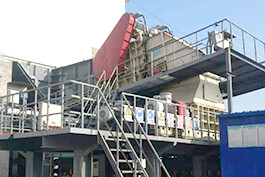
A blockage signal should be set up. When a blockage or other faults occur, Roller Screen should be able to alarm and automatically stop. The receiving surface of the feed inlet should have a wear-resistant lining plate as a feed diversion plate to ensure that the material flow enters the sieve surface smoothly and uniformly. The upper part of the body of Roller Screen should be equipped with safety guardrails around, with a height of no less than 1200mm, to prevent workers from falling from the equipment during maintenance.
Conclusion
Compared with traditional screening equipment, the Roller Screen's inclined screen surface design, single-axis independent drive combined with dual protection mechanisms, self-cleaning and fault-linked shutdown solutions can effectively address common problems such as easy blockage of sticky and wet coal types, short lifespan of wear-resistant parts, and insufficient screening efficiency. It can meet the operation requirement of a screening efficiency of no less than 80%.


.jpg)