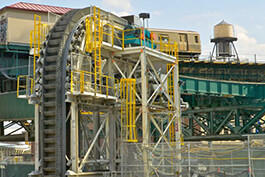
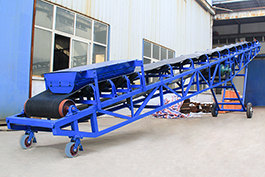
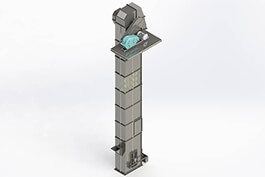
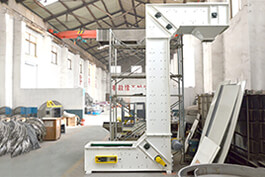
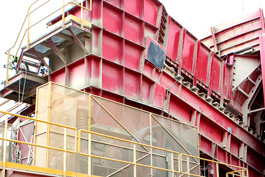
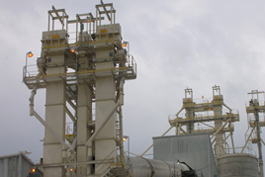
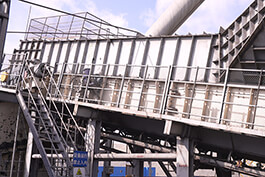
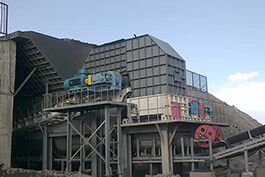
Bucket Elevator includes types such as belt bucket elevator and chain bucket elevator. It is a widely used vertical lifting equipment in agricultural product processing plants and grain bureaus, etc. It has the advantages of large lifting height, stable lifting, small floor area and good sealing performance, and is suitable for transporting powdery and small-block materials.
Troubleshooting for Bucket Elevator during operation
Bucket belt slippage
Insufficient belt tension
Insufficient belt tension will cause slippage. At this time, the machine should be stopped immediately and the tensioning device should be adjusted to tighten the belt. If the tensioning device cannot fully tighten the belt, it indicates that the travel of the tensioning device is too short. It should be re-adjusted.
The correct solution is: Unfasten the Bucket belt connection, adjust the tensioning device on the bottom pulley to the highest position, place the Bucket belt from the bucket elevator head, pass through the top pulley and bottom pulley, and connect the head and tail properly, so that the belt is in a state of being tensioned but not fully tensioned. Then fully tighten the tensioning device. At this time, the unutilized travel of the adjusting screw of the tensioning device should not be less than 50% of the full travel.
Bucket Elevator overload
When the equipment is overloaded, the resistance torque increases, causing belt slippage. At this time, the feeding amount of materials should be reduced and efforts should be made to ensure uniform feeding. If reducing the feeding amount still cannot improve the slippage, it may be that there is too much material accumulation in the machine base or the hopper is blocked by the materials, so the machine should be stopped for inspection and troubleshooting.
Head pulley drive shaft and belt inner surface are too smooth
The head pulley drive shaft and the inner surface of the belt are too smooth, reducing the friction between them, causing belt slippage. At this time, a layer of glue can be applied to the drive shaft and the inner surface of the belt to increase the friction.
The head pulley and bottom pulley bearings do not rotate smoothly
The bearings of the head pulley and the bottom pulley do not rotate smoothly, increasing the resistance torque, causing belt slippage. At this time, the bearings can be disassembled, washed, and lubricated or replaced.
Bucket belt deviation
Incorrect installation of head pulley and bottom pulley drive shafts
The incorrect installation of the drive shafts of the head pulley and the bottom pulley is mainly manifested in the following aspects: Firstly, the drive shafts of the head pulley and the bottom pulley are in the same vertical plane but not parallel; Secondly, both drive shafts are installed in a horizontal position but not in the same vertical plane; Thirdly, the two drive shafts are parallel, in the same vertical plane, but not horizontal. At this time, the belt deviates, which is likely to cause the bucket and the barrel to collide, and the belt to tear. The machine should be immediately stopped to eliminate the fault. Ensure that the drive shafts of the head pulley and the bottom pulley are in the same vertical plane and are both in a horizontal position. The vertical deviation of the center line of the entire machine at a height of 1000mm should not exceed 2mm, and the accumulated deviation should not exceed 8mm.
Incorrect belt joint
During operation, one side of the belt is tight and the other side is loose, causing the belt to move towards the tight side and resulting in deviation. This causes insufficient filling of the bucket, incomplete discharge, increased backflow, and a decrease in productivity. In severe cases, it may cause the bucket to be stuck or torn. At this time, the machine should be stopped, the joint should be corrected, and it should be reconnected.
.jpg)
Excessive backflow of materials
Bucket elevator backflow refers to the situation where some materials do not completely exit the machine at the discharge position and instead return to the base of the bucket elevator. During the lifting operation, if there is too much backflow, it will inevitably reduce production efficiency, increase power consumption and the crushing rate of the materials. The reasons for excessive backflow include the following points:
The buckets run too fast
When bucket elevators lift different materials, the running speed of the buckets varies: when lifting dry powder and granular materials, the speed is approximately 1-2/s; when lifting blocky materials, the speed is 0.4-0.6m/s; when lifting damp powder and granular materials, the speed is 0.6-0.8m/s. If the speed is too high, the discharge occurs prematurely, resulting in backflow. At this time, the speed of the bucket should be appropriately reduced according to the lifted materials to avoid backflow.
The discharge tongue plate at the machine head outlet is installed improperly
If the tongue plate is too far from the discharge position of the bucket, backflow will occur. It is necessary to adjust the position of the tongue plate in time to avoid backflow.
Bucket detachment
Bucket detachment refers to the phenomenon where buckets fall off the belt during production. When a bucket detaches, it will produce abnormal sounds. It is necessary to stop the machine immediately for inspection. Otherwise, more buckets will deform and detach; at the connection point of the buckets, the belt will tear. The main causes of detachment are:
Excessive feed
Excessive feed causes the materials to accumulate in the base, increasing the lifting resistance and making the bucket operate less smoothly. This is the direct cause of bucket detachment and deformation. At this time, the machine should be stopped immediately, the plug in the base should be removed, the accumulated materials in the base should be discharged, a new bucket should be replaced, and then production can resume. At this time, reduce the feed amount and strive for uniformity.
The feed inlet position is too low
Generally, in production, the bucket automatically collects the materials from the feed inlet. If the feed inlet position is too low, the bucket will not have enough time to collect the materials, and most of the materials will enter the base, causing the bucket to scoop up the materials. Since the materials are in the form of blocks, they are prone to deformation and detachment. At this time, the feed inlet position should be adjusted above the center line of the bottom wheel.
Poor bucket material
The bucket is the load-bearing component of the Bucket Elevator. There are higher requirements for the material. During installation, it is advisable to select materials with good strength. Generally, buckets are welded or stamped from ordinary steel plates or galvanized sheets, and the edges are reinforced by folding or rolling in lead wire to enhance strength.
Failure to clear accumulated base materials before restarting production
During production, it is often encountered that the machine stops suddenly or for other reasons. If the accumulated materials in the base are not cleared before restarting, it is easy to cause the bucket to be subjected to excessive impact and break and detach. Therefore, between stopping and restarting the machine, the accumulated materials in the base must be cleared to avoid detachment. In addition, regularly check whether the connection between the bucket and the belt is firm. When finding phenomena such as loose screws, detached buckets, skewed or damaged buckets, they should be repaired or replaced in time to prevent larger accidents.
Bucket elevator belt tear
The bucket elevator belt is usually made of canvas, and sometimes it is also made of adhesive tape and chains. Under the combined effect of various faults, the canvas belt and adhesive tape are prone to tearing, which is one of the most serious faults. Generally, the process of belt deviation and bucket detachment is the most likely to cause the belt to tear. It is necessary to promptly and comprehensively investigate the cause and eliminate the fault. In addition, if foreign objects with sharp edges are mixed in the materials, they will also tear the belt. Therefore, in production, steel wire mesh or magnetic stones should be installed at the feed inlet to prevent large foreign objects from falling into the machine base.