Introduction
Coal, as an indispensable basic energy source and industrial raw material in many countries currently and in the foreseeable future, requires clean and efficient utilization to ensure energy security, promote economic development, and achieve environmental sustainability goals. Raw coal, especially from open-pit mines or underground mines with complex hydrogeological conditions, has extremely unstable physical properties. Affected by mining methods, storage conditions, and seasonal rainfall, the moisture content of raw coal, especially surface moisture, can fluctuate significantly.
This wet and sticky characteristic causes the following impacts on traditional screening equipment:
Screen aperture blockage (Blinding/Pegging): Wet fine coal particles are extremely easy to adhere to the surface of rigid screen media (such as woven wire mesh and perforated plates) of traditional vibrating screens, or become wedged into the screen apertures, forming a “mud cake”, causing the effective screening area to rapidly decrease or even completely disappear.
Low screening efficiency: Once the screen apertures are blocked, the subsequently fed material cannot normally pass through the screen surface, causing a large amount of qualified particles that should enter the undersize product (fine coal) to be forced into the oversize product together with coarse coal.
The design concept and working method of Flip Flow Screen fundamentally changes the interaction mode between material and screen surface, achieving efficient and anti-blocking screening of wet sticky materials.
Core Technical Principle and Design Features of Flip Flop Screen
Working Principle
Dual Screen Frame Structure
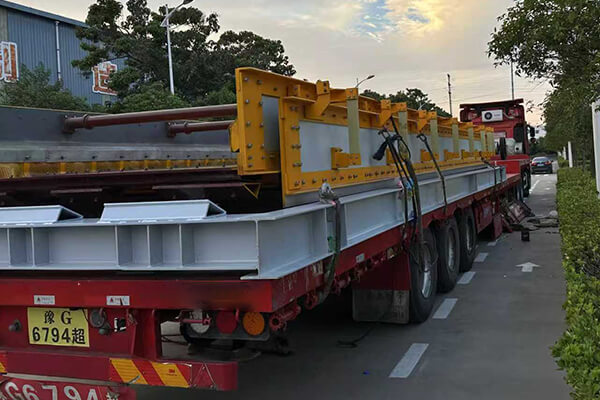
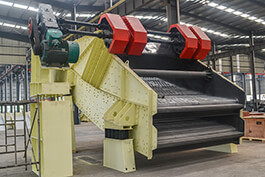
Flip Flop Screen usually consists of a fixed main screen frame (also called the outer screen frame) and a floating screen frame (also called the inner screen frame) that moves inside it. The main screen frame is supported on the foundation through vibration isolation springs and driven by a drive system (such as an exciter or crank connecting rod mechanism) to generate a specific motion trajectory (such as linear or circular vibration). The floating screen frame is connected to the main screen frame through elastic components (such as polyurethane springs, rubber springs, or patented leaf spring systems).
Relative Motion and Resonance
When the main screen frame vibrates, it excites the floating screen frame through the connected elastic components. Since the mass and elastic system characteristics of the two screen frames are carefully designed, the entire system operates in a near-resonance state. This means that a relatively small amplitude of the main screen frame can excite a very large relative amplitude of the floating screen frame. The two screen frames periodically “separate” and “approach”, forming strong relative displacement.
Elastic Screen Surface
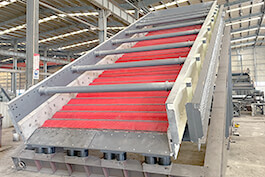
The screen surface of Flip Flop Screen is not rigid, but made of highly elastic polyurethane (Polyurethane, PU) and other materials. The flexible screen panels are respectively fixed on the cross beams of the main screen frame and the floating screen frame. When the two screen frames undergo intense relative movement, the screen surface is alternately and repeatedly stretched (Tensioning) and relaxed (Relaxing).
Key Structural Components
Elastic Screen Decks
Material Selection
At present, Flip Flop Screen screen surfaces are almost exclusively made of special engineering polyurethane (PU) or similar polymer materials, which can withstand hundreds or thousands of intense stretching and rebound cycles per minute without permanent deformation or tearing. Coal, especially raw coal containing gangue, has strong abrasiveness. The wear resistance of polyurethane is far superior to metal and even rubber, ensuring a sufficiently long service life of the screen surface. The smooth surface is not easily bonded with wet coal, and the extremely low water absorption ensures stable physical properties in humid environments.
Structural Design
According to material characteristics and screening size requirements, the screen panels can be designed with various aperture shapes such as square, rectangular, and circular. To facilitate rapid replacement and reduce stress concentration points, screen panels usually do not use bolt fixing. Wedge strips or snap-in designs are adopted. The screen panels are embedded into grooves of the screen frame and then fastened with rubber or polyurethane wedge strips. No special tools are required during installation and removal, greatly shortening maintenance time.
Screen Frame and Drive System
Crank-Guide Drive
The crank-guide drive is driven by an internal crank connecting rod mechanism in the drive system, causing the inner and outer screen frames to generate linear reciprocating motion (without an exciter). Through the crank connecting rod mechanism, the main screen frame and floating screen frame are directly driven to produce relative movement. Its amplitude and frequency are precisely determined by the crank length and rotational speed, with clear kinematic relationships and intuitive adjustment.
Main Technical Specifications and Parameters
Screening Particle Size Range
Flip Flow Screen can process a wide range of material particle sizes, generally from 0-100 mm. However, its core advantage lies in processing -13 mm, especially wet fine materials below -6 mm. In many applications, it can achieve effective dry screening as low as 2-3 mm or even finer, which is almost impossible for traditional screening machines.
Processing Capacity
The processing capacity of a single machine depends on the screen width, length, material characteristics, and screening particle size. Equipment widths on the market usually range from 1.0 meters to 4.3 meters, and lengths can range from 4 meters to 12 meters. According to different models and working conditions, the processing capacity of a single machine can range from several tens of tons per hour to more than 1500 tons per hour. For example, when processing 13 mm wet sticky materials, its efficiency can remain stable at 90%-95%.
Operating Parameters
Inclination
The installation inclination angle of the screen surface is usually adjustable between 5° and 30° to balance processing capacity and screening accuracy. A larger inclination angle helps materials pass through quickly and increases throughput; a smaller inclination angle increases material residence time on the screen surface and improves screening efficiency.
Vibration Parameters
The driving speed of linear motion screening machines is usually around 800 r/min. The most critical parameter—as mentioned above—is acceleration, which can stably exceed 50G.
Equipment Dimensions
Compared with traditional screening systems that achieve the same processing capacity for wet sticky materials (which may require multiple machines installed in parallel or a large number of auxiliary facilities), Flip Flow Screen usually occupies less space and has a more compact layout.
Conclusion
With its unique dual-body resonance and elastic screen surface deformation working principle, Flip Flow Screen generates ultra-high acceleration (>50G) that traditional screening machines cannot achieve, thereby realizing self-cleaning and anti-blocking capabilities. When processing high-moisture, high-viscosity, fine-particle-rich difficult-to-screen coal, it can maintain continuous and efficient operation, avoiding the frequent downtime problems of traditional vibrating screens caused by screen aperture blockage.


.jpg)