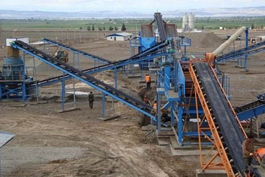
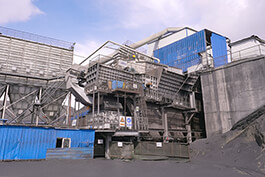
The special material properties of natural gypsum rock have led traditional vibrating screens and Trommel Screen to generally encounter problems such as blockage, powdering, low efficiency, and high maintenance costs. In response to the screening challenges of gypsum rock, such as its soft texture, wet and sticky nature prone to adhesion, high content of mud impurities, and significant differences in dry and wet working conditions, Wobbler Feeder, with its exclusive structural design and flexible screening principle, has become one of the optimal equipment for the pre-treatment and fine screening of natural gypsum rock and is widely adaptable to various complex gypsum screening conditions.
Natural gypsum rock material characteristics
Physical properties
The Mohs hardness of natural anhydrite gypsum is only 1.5–2, belonging to extremely soft minerals, with a density of 2.31–2.33 g/cm³. The raw stones are mostly white or light yellow blocks. The gypsum rocks mined in the open air are generally mixed with mud blocks, sand, and other impurities. The moisture content of high-quality natural gypsum should not exceed 3.0%, but the moisture content of the on-site mined materials fluctuates greatly. During the rainy season and in open-air conditions, the material's wet and sticky characteristics are significant, easily forming clumps, significantly increasing the difficulty of screening.
Mechanical properties
Gypsum rock has high brittleness and extremely low compressive strength. It is prone to excessive powdering when subjected to high-frequency vibration, mechanical compression, and intense impact. The high-frequency vibration and forced impact mode of traditional screening equipment will cause a large amount of high-quality gypsum raw stones to be crushed into fine powder, unable to be utilized to the standard, directly resulting in raw material loss and a decrease in finished product recovery rate, and increasing the production cost of the mine.
Operating conditions characteristics
The particle size distribution of natural gypsum raw stones is extremely uneven. Large blocks of raw stones are mixed with fine materials, and the mine production has no fixed dry or wet material conditions. Alternating processing of dry and wet materials is the norm. This complex working condition places extremely high requirements on the adaptive ability, anti-blockage ability, and continuous operation ability of the screening equipment.
Problems of traditional vibrating screen for gypsum rock processing
Vibrating Screen
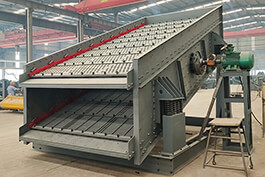
The vibrating screen achieves material screening through high-frequency vibration. When processing wet and sticky gypsum or gypsum containing clay, fine particles and viscous materials are prone to adhere to the screen mesh and block the mesh holes. Moreover, the smaller the mesh size, the more severe the material blockage. Frequent shutdowns for manual cleaning are required, which seriously affects the continuity of the production line. At the same time, the high-frequency vibration will continuously impact the soft gypsum rock, causing a large amount of raw stones to undergo excessive pulverization, resulting in a significant increase in the loss rate of high-quality raw materials and an inability to ensure the integrity of the finished product particle size.
Trommel Screen
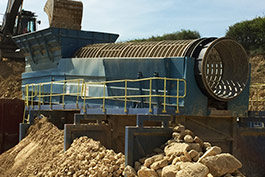
The Trommel Screen has extremely strict requirements for the moisture content of the materials, and it can operate normally only when the moisture content is strictly controlled below 15%. It is completely unable to adapt to wet materials from mines or production conditions during rainy seasons. Wet and sticky gypsum materials will tightly adhere to the surface of the Trommel Screen, causing material accumulation and clogging, incomplete separation of coarse and fine materials, significant decline in screening accuracy, and the need for additional drying and pre-classification equipment, thereby increasing equipment investment and operation costs.
Fixed Screen/Strip Screen
The fixed screen has a simple structure and no dynamic screening mechanism. It cannot disperse and stratify wet and sticky gypsum materials. Wet and dry materials are mixed and piled up, which easily leads to blockage and leakage problems. The screening efficiency is extremely low, and it can only meet the requirements of rough processing.
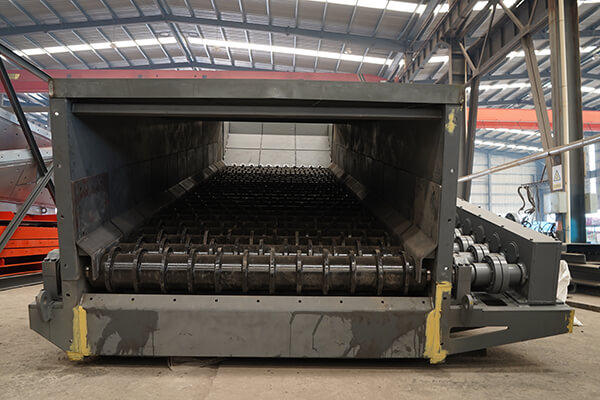
Wobbler Feeder Working Principle
Core Equipment Structure
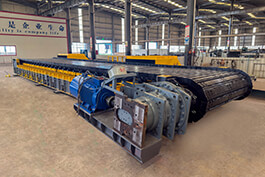
The equipment is composed of a variable frequency motor, a reducer, multiple parallel screen shafts, an irregularly shaped anti-blockage screen disk, a sealing frame, an overload protection system, and a cleaning device. The screen shafts are arranged in a staggered and inclined manner, and the screen disks are equipped with rhombic and triangular irregularly shaped wear-resistant structures. The labyrinth seal design and automatic cleaning device are combined. At the same time, an electrical overload protection and rod pin protection structure are integrated. From a hardware perspective, it eliminates problems such as blockage, shaft jamming, and equipment damage. It supports variable frequency speed regulation and can flexibly adjust operating parameters according to the characteristics of gypsum materials.
Sieve Operation Principle
The Wobbler Feeder eliminates the high-frequency vibration screening mode and completes the screening operation through the differential low-speed rotation of multiple screen shafts in the same direction. The screen shafts are arranged with different angles of height, and the materials are rapidly transported at a high angle and slowly slide at a low angle. Different running speeds of materials converge and disperse evenly on the screen surface, completely disintegrating the adhered and compacted gypsum materials.
During the screening process, fine materials smaller than the screen gap and qualified gypsum particles freely pass through the screen, while large pieces of raw stones and impurities larger than the gap are smoothly transported by the screen disk to the next crushing process. There is no violent impact or forced compression, achieving integrated operations of material disintegration, fine separation, and impurity isolation.
Anti-blockage and Anti-sticking Design
The screen disk continuously rotates to automatically remove wet mud and gypsum fine materials adhering to the surface of the equipment. Combined with the bottom automatic cleaning device, it eliminates screen surface blockage from the root cause. At the same time, the Wobbler Feeder is equipped with dual overload protection. When the screen shaft is stuck, it can automatically alarm and stop to protect the equipment, avoiding damage to the motor and transmission structure, ensuring long-term stable operation of the equipment, and truly achieving "no blockage, no jamming, continuous operation."
Advantages of Wobbler Feeder in Processing Natural Gypsum Rock
Reducing excessive pulverization
The Wobbler Feeder transports materials at a low speed throughout, without high-frequency vibration or violent impact. It achieves protective screening for soft gypsum rock, effectively avoiding the crushing and pulverization of raw stones, maximizing the retention of product particle size integrity, significantly increasing the recovery rate of high-quality gypsum raw materials, and reducing resource loss.
Anti-blockage and Anti-sticking
For the characteristics of wet and sticky gypsum and adhered mud, the dynamic rotating screen disk can automatically remove the adhesives. There is no need for drying equipment. It can directly handle natural gypsum rock with high moisture content, high viscosity, and high impurity content. This completely solves the problems of wet material blocking the screen and sticky materials, and is suitable for all-day production conditions in mines.
Wide Adaptability
It can fully adapt to various gypsum materials such as natural anhydrite, hard gypsum, and mixed gypsum, and is compatible with original stone classification, mud and impurity removal, desulfurized gypsum pre-treatment, and fine classification of gypsum building materials raw materials. It is suitable for gypsum raw materials of different grades, particle sizes, and impurity contents.
Capacity Stability
The Wobbler Feeder has a processing capacity of 150–1000 t/h, which can meet the large-scale production needs of gypsum mines of various sizes. The equipment can operate continuously and stably for 24 hours, with multiple screen shafts operating in conjunction, and a single shaft failure not affecting the overall operation. The production line has strong continuity.
Application of Wobbler Feeder in the Processing of Natural Gypsum Rock
Pre-treatment and Grading of Raw Gypsum Ore
As the first screening equipment in the gypsum production line, it conducts coarse and fine classification, removes mud and impurities from the mixed raw stones, separates out qualified fine materials for direct use in purification processing, and transports the large blocks of raw stones to the crusher for secondary processing. This optimizes the load of subsequent crushing processes and improves the overall production efficiency.
Screening of Desulfurized Gypsum/Industrial Gypsum Raw Materials
Suitable for the pre-treatment operations of desulfurized gypsum and other industrial by-product gypsums, it solves the screening problems of high humidity, many impurities, and easy adhesion of industrial gypsum, realizes refined classification of raw materials, and meets the raw material standards for cement retarders, gypsum boards, and gypsum blocks, etc.
Precise Processing of Gypsum Building Materials Raw Materials
For the production needs of high-end gypsum products, it conducts precise screening of primary gypsum raw materials, removes impurities and unqualified large blocks of materials, ensures uniform particle size and qualified purity of raw materials, and improves the strength, stability, and quality of gypsum products.
Conclusion
The core difficulty in the screening of natural gypsum rock lies fundamentally in the contradiction between soft, wet, and sticky materials and traditional rigid screening equipment. Traditional equipment such as vibrating screens and Trommel Screen cannot meet the production requirements of preventing blockage, preventing pulverization, high precision, and low maintenance. However, the Wobbler Feeder, with its core advantages of low-speed flexible screening, dynamic anti-blocking, and full-condition adaptability, can overcome these challenges.


.jpg)